

2026 GMC Sierra 1500 Colorado Buyers Guide
By Ryan Green, Marketing Director — Weld County Garage GMC | Updated February 2026
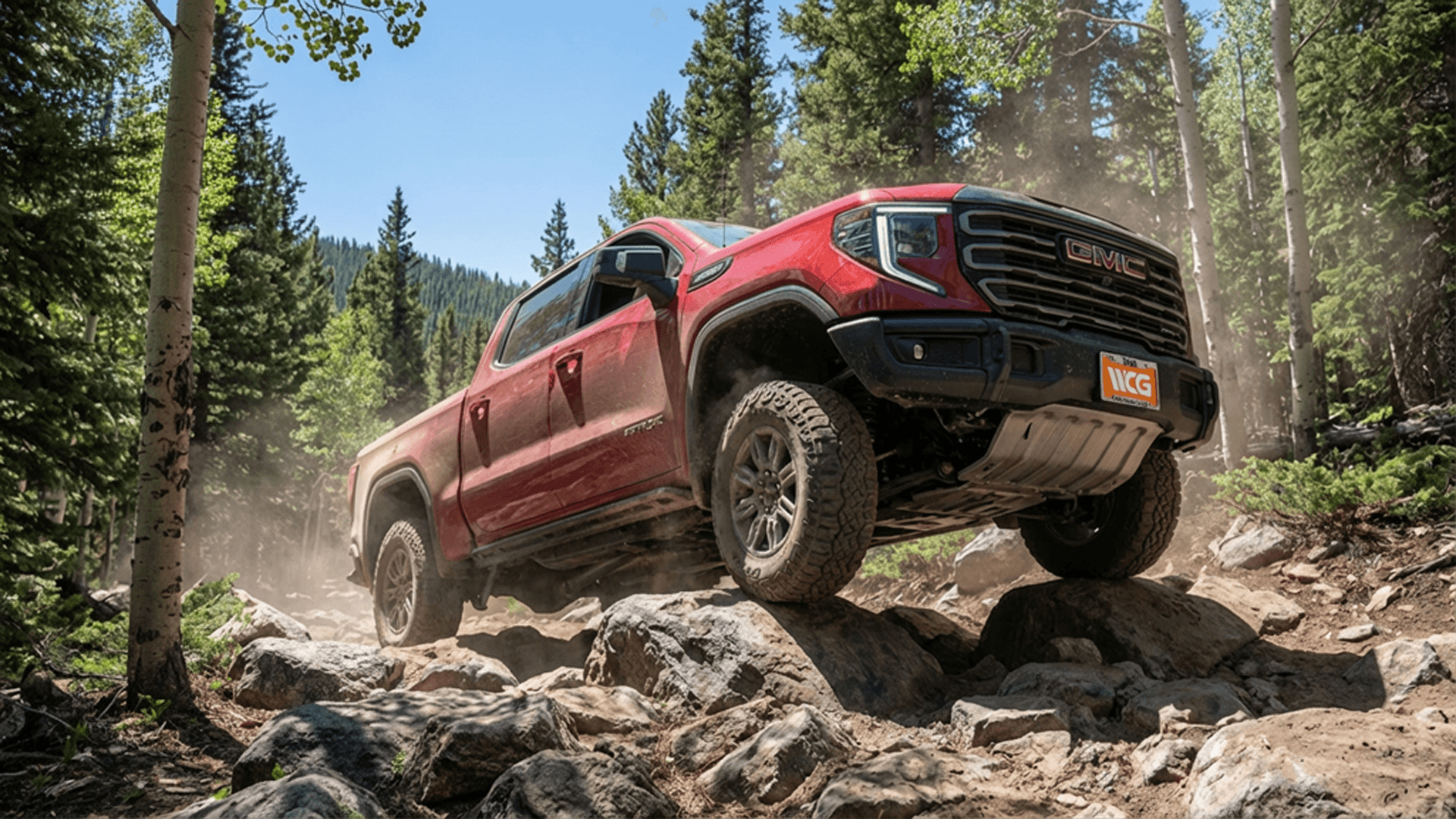
▶ Direct Answer: Is the 2026 GMC Sierra 1500 Good for Colorado?
Yes. The 2026 GMC Sierra 1500 is exceptionally well suited for Colorado driving because its turbocharged engine options maintain torque at elevation, its available 4WD systems provide winter traction, its cooling systems support sustained mountain grades, and its trim lineup supports both work and recreation across Northern Colorado.
I’ve lived and worked in Northern Colorado long enough to know something national truck reviews rarely talk about: trucks behave differently here. On paper, most half-ton pickups look impressive — horsepower, torque, tow ratings. It all reads well in a spec sheet. But paper doesn’t climb Loveland Pass. Paper doesn’t tow a camper westbound on I-70 in July heat. Paper doesn’t deal with I-25 crosswinds outside Windsor in March.
Colorado isn’t flat. It isn’t mild. And it’s definitely not sea level. Leave Greeley at 4,658 feet and head toward the Eisenhower Tunnel at 11,158 feet and you’ll feel it. Engines respond differently. Transmissions shift differently. Passing power feels different. If you’re towing, everything feels different.
This guide is a Colorado-specific breakdown of how the 2026 GMC Sierra 1500 performs in real conditions across Greeley, Windsor, Fort Collins, Loveland, Longmont, Boulder, and Denver — and into the mountain corridors that define life here.
Section 1: Colorado Changes the Way a Truck Should Be Built
When you commute between Greeley and Denver, haul equipment across Weld County farmland, explore mountain access roads near Estes Park, or tow west toward Glenwood Springs, your truck has to handle real Colorado conditions:
The 2026 GMC Sierra 1500 isn’t just another half-ton pickup. In Colorado, it’s either configured correctly for altitude, sustained load, winter traction, and crosswind stability — or it isn’t. This guide covers configuration strategy, not just specs.
Section 2: Engine Performance at Elevation — The Physics of Colorado Driving
Elevation is not a marketing concept. It is a mechanical reality. Internal combustion engines rely on oxygen density to produce power. As elevation increases, atmospheric pressure decreases — less air density means less oxygen entering the combustion chamber, which reduces combustion efficiency and effective output.
Elevation Power Loss Benchmark:
Naturally aspirated engines lose approximately 3% of effective power for every 1,000 feet of elevation gained — roughly 15% at 5,000 ft, 24% at 8,000 ft, and nearly 30% at 10,000 ft under sustained load.
Turbocharged engines compress intake air before combustion, offsetting the loss caused by thinner mountain air. The result is improved torque consistency at elevation — and in real-world Colorado driving, torque availability at lower RPM is often more important than peak horsepower.
| Engine | Horsepower | Torque | Colorado Elevation Behavior |
|---|---|---|---|
| TurboMax™ 2.7L | 310 hp | 430 lb-ft | Maintains mid-range torque; strong daily and light towing performance at altitude |
| 3.0L Duramax® Diesel | 305 hp | 495 lb-ft | Superior low-RPM torque; highly consistent under sustained mountain load |
| 5.3L V8 | 355 hp | 383 lb-ft | Strong overall; noticeable elevation impact under heavy load |
| 6.2L V8 | 420 hp | 460 lb-ft | High peak output; elevation impact mitigated by displacement but still present |
Real-World Scenario: I-70 Westbound Climb
Towing a 7,500-pound camper from Denver toward Eisenhower Tunnel — under sustained 6–7% grade, air density drops progressively, cooling demand increases, and torque availability becomes critical. Engines with strong low-RPM torque curves maintain speed with fewer aggressive downshifts, translating into smoother power delivery and less drivetrain strain.
Section 3: Diesel vs Gas in Colorado — Strategic Configuration for Elevation and Load
The diesel versus gas debate looks simple on paper. It is not simple in Colorado. The decision must account for elevation loss, sustained mountain grades, trailer weight, wind exposure, and long-term thermal stress.
- Stronger low-RPM torque delivery (495 lb-ft)
- Reduced engine strain under sustained grade
- Improved fuel efficiency when towing
- Greater engine braking on descents
- More stable power output at elevation
- Lower initial purchase price
- Strong unloaded acceleration
- Smoother operation for short commutes
- Lower maintenance complexity for light use
- 6.2L V8 delivers 420 hp / 460 lb-ft
| Driving Profile | Recommended Engine | Reasoning |
|---|---|---|
| Frequent mountain towing (7,000+ lbs) | 3.0L Duramax Diesel | Low-RPM torque + sustained load efficiency |
| Moderate towing + daily commuting | TurboMax™ 2.7L | Balanced torque + elevation resilience |
| Primarily commuting + occasional towing | 5.3L V8 | Cost-effective versatility |
| Performance-focused driver | 6.2L V8 | Higher peak horsepower |
Section 4: Thermal Management, Grade Logic & Mountain Engineering
Elevation affects power. Sustained grade affects heat. In Colorado, those two forces combine. Mountain towing is not about peak output — it is about thermal stability over time. Towing 8,000 pounds on flat interstate in Kansas and towing 8,000 pounds from Denver to Eisenhower Tunnel are mechanically different scenarios.
For Colorado drivers who tow regularly, selecting available trailering packages ensures additional cooling capacity, transmission temperature stability, and brake control integration are present when conditions demand it most.
Section 5: Winter Traction Engineering & Front Range Driving Strategy
Colorado winters are not uniform. Greeley might see blowing snow and open-field wind drift. Fort Collins might experience sudden freeze-thaw cycles. Denver can alternate between sunshine and ice within hours. In this environment, drivetrain configuration is not optional — it is strategic.
Sierra 1500 Winter Traction Package Includes:
4WD High & Low Modes
Electronic Locking Rear Differential
Hill Descent Control (AT4/AT4X)
Stability Control with Traction Modulation
Trailer Sway Control
Pickup trucks are naturally rear-wheel biased. Without load in the bed, rear traction can be limited in slippery conditions. Available 4WD mitigates this by distributing torque to front wheels when rear slip is detected — particularly valuable for early-morning commuters when temperatures drop quickly.
Tire Strategy Note: Even the most advanced drivetrain cannot overcome poor tire compound selection. Colorado drivers should consider all-terrain tires with winter rating, dedicated winter tires for severe conditions, and monitor tire pressure through temperature swings. Drivetrain capability and tire compound work together — one without the other limits winter performance.
Section 6: Trim Strategy — Matching Sierra 1500 Configurations to Real Colorado Use
Trim levels are not cosmetic upgrades. In Colorado, they represent functional differences that directly affect performance in mountain, winter, work, and commuting scenarios.
| Primary Use Case | Recommended Trim | Why |
|---|---|---|
| Agriculture / Work Use | Pro / SLE | Durability and value |
| Balanced Work + Commute | SLT | Utility with comfort |
| Mountain Recreation | AT4 | Off-road readiness |
| Advanced Terrain Driving | AT4X | Locking differentials + DSSV suspension |
| Executive Commuting | Denali / Denali Ultimate | Refinement + power |
Section 7: Sierra 1500 vs Ford F-150 vs Ram 1500 — Colorado-Specific Comparison
National truck comparisons often focus on horsepower numbers or infotainment screens. Colorado requires a different lens — elevation behavior, torque delivery under sustained grade, winter traction systems, long-distance comfort, and mechanical stability under thermal stress.
| Factor | GMC Sierra | Ford F-150 | Ram 1500 |
|---|---|---|---|
| Elevation Torque Consistency | TurboMax + Duramax | EcoBoost turbocharged | HEMI naturally aspirated |
| Off-Road Capability | AT4 / AT4X | Tremor / Raptor | Rebel (mixed use) |
| Highway Commute Comfort | Strong in Denali/SLT | Balanced options | Coil-spring rear comfort |
| Diesel Availability | 3.0L Duramax available | Power Stroke available | EcoDiesel available |
For Colorado buyers prioritizing torque consistency at elevation, balanced off-road readiness, premium commuting comfort, and diesel availability — the 2026 GMC Sierra 1500 remains a strong strategic option.
Section 8: 10 Common Configuration Mistakes Colorado Sierra Buyers Make
Most truck dissatisfaction does not come from brand choice. It comes from configuration mismatch. Colorado exposes weak configuration decisions quickly.
Section 9: Colorado Buying Checklist & Configuration Decision Matrix
| Primary Use | Engine | Drivetrain | Trim |
|---|---|---|---|
| Daily commute, light towing | TurboMax™ 2.7L | Available 4WD | SLT |
| Frequent mountain towing | 3.0L Duramax Diesel | 4WD | AT4 or Denali |
| Foothill property access | TurboMax or Diesel | 4WD | AT4 |
| Executive commuting + power | 6.2L V8 | Available 4WD | Denali / Denali Ultimate |
| Work-focused fleet use | 5.3L V8 | RWD or 4WD | Pro / SLE |
Section 10: How the Sierra 1500 Performs Across Northern Colorado Zones
Colorado is not a single driving environment. It is a layered combination of prairie wind exposure, urban commuting, foothill elevation, and high-mountain grade corridors.
Section 11: 25 Frequently Asked Questions About the 2026 GMC Sierra 1500 in Colorado
1. Is the 2026 GMC Sierra 1500 good for high elevation driving?
Yes. Turbocharged engine options such as the TurboMax™ and the available 3.0L Duramax diesel maintain torque more effectively at elevation than naturally aspirated engines. This makes the Sierra 1500 well suited for Colorado’s altitude changes.
2. How much power does a Sierra 1500 lose at 10,000 feet?
Naturally aspirated engines can lose close to 30% effective output at 10,000 feet. Turbocharged engines mitigate much of this loss by compressing intake air before combustion, maintaining more consistent torque and output at altitude.
3. Is diesel better than gas for Colorado mountain towing?
For frequent mountain towing, diesel engines often provide stronger low-RPM torque and improved efficiency under sustained grade. For lighter or occasional towing, gas engines remain practical and cost-effective options.
4. What is the best engine for towing in Colorado?
The 3.0L Duramax diesel is particularly well suited for sustained mountain towing due to its 495 lb-ft of torque delivered at low RPM. That torque consistency on extended grades reduces downshifting and maintains stable speed without overworking the drivetrain.
5. Is 4WD necessary in Northern Colorado?
While not mandatory, available 4WD provides significant traction advantages during snow, ice, and crosswind conditions common along the Front Range. For regular commuters traveling early mornings or in variable winter conditions, 4WD offers meaningful safety and confidence benefits.
6. Does the Sierra 1500 handle I-70 mountain grades well?
When properly configured with appropriate engine and trailering packages, the Sierra 1500 manages sustained 6–7% grades with stable torque delivery and cooling system support. Turbocharged and diesel engine options show less elevation impact on these extended climbs.
7. What trim is best for mountain access roads?
The AT4 trim offers factory lift for improved ground clearance, off-road tuned suspension, skid plates, and terrain modes — making it well suited for Colorado mountain access roads, forest service routes, and foothill property driveways.
8. Is AT4X necessary for most Colorado drivers?
AT4X is ideal for advanced off-road conditions and frequent technical terrain driving. Many Colorado drivers find AT4 sufficient for forest roads and moderate terrain. AT4X adds Multimatic DSSV dampers and front/rear locking differentials for more demanding scenarios.
9. Is the Sierra 1500 good for commuting between Greeley and Denver?
Yes. Denali and SLT trims provide highway comfort, advanced driver-assist systems, and refined ride quality for long-distance commuting. The cabin isolation and ergonomic seating in higher trim levels make the daily I-25 run significantly more comfortable.
10. How does elevation affect fuel economy?
Elevation can reduce efficiency in naturally aspirated engines due to reduced combustion density. Turbocharged and diesel engines tend to maintain efficiency more consistently under load at altitude, which can be a meaningful long-term consideration for Colorado owners.
11. What axle ratio is best for Colorado towing?
Axle ratio should match your typical trailer weight. Lower (numerically higher) gearing improves climbing efficiency during sustained mountain grades by keeping the engine within its optimal torque band, reducing aggressive downshifts and drivetrain stress.
12. Is the TurboMax engine strong enough for Colorado?
Yes. With 430 lb-ft of torque, the TurboMax™ 2.7L delivers strong mid-range power suitable for daily driving and moderate towing at elevation. Its turbocharged design helps offset altitude-related power loss, making it a well-balanced choice for most Front Range drivers.
13. How does winter driving affect truck performance?
Cold temperatures reduce tire pressure and affect traction compound performance. The Sierra’s 4WD systems and Electronic Stability Control assist in maintaining control during icy conditions, while AutoTrac® redistributes torque automatically as traction conditions change.
14. Is the Sierra stable in high winds?
The Sierra’s stability systems and wheelbase design help manage crosswind exposure common in open Weld County terrain and along I-25 north of Denver. When towing, trailer sway control systems provide additional lateral stability in high-crosswind conditions.
15. Does diesel help with downhill braking?
Diesel engines often provide stronger engine braking characteristics due to higher compression ratios, assisting during long mountain descents such as Eisenhower Tunnel toward Silverthorne or Berthoud Pass toward Winter Park. This reduces reliance on service brakes and lowers the risk of brake fade.
16. Is the Sierra 1500 reliable for long-term Colorado ownership?
When properly configured and maintained, the Sierra platform is engineered for durability across varied terrain and elevation conditions. Configuration alignment with Colorado driving patterns — engine, axle ratio, trim — significantly influences long-term satisfaction.
17. What trim is best for executive commuting?
Denali and Denali Ultimate offer premium interior materials, advanced driver-assist features, and highway-focused noise isolation suited for long-distance commuting along I-25 or between Northern Colorado cities and Denver.
18. Is rear-wheel drive enough for Colorado winters?
Rear-wheel drive can function with proper tires in mild winter conditions, but available 4WD increases confidence significantly on Colorado’s mixed-surface, wind-driven winter roads. For regular Front Range commuters, the 4WD upgrade is generally a sound investment.
19. How important are trailering packages in Colorado?
Trailering packages enhance cooling capacity, braking integration, trailer sway management, and transmission temperature stability — all of which are critical under Colorado’s sustained mountain towing conditions. They are among the most important configuration additions for regular mountain towers.
20. Does the Sierra 1500 perform well in Estes Park terrain?
AT4 and AT4X trims are particularly suited for foothill and uneven terrain access common near Estes Park. Factory lift, terrain modes, and available locking differentials provide traction confidence on the mixed pavement, gravel, and elevation transitions in that corridor.
21. Is the 6.2L V8 practical in Colorado?
The 6.2L V8 offers strong peak performance with 420 hp and 460 lb-ft of torque. Drivers who prioritize acceleration and power may prefer it, though naturally aspirated engines experience more noticeable elevation impact under heavy load compared to turbocharged or diesel options.
22. What is the max towing capacity of the Sierra 1500?
When properly equipped, the Sierra 1500 can tow up to 13,300 pounds, depending on configuration. Specific tow ratings vary by engine, axle ratio, cab/bed configuration, and available trailering package selections.
23. How does the Sierra compare to F-150 in Colorado?
Both platforms offer competitive turbocharged and diesel options suitable for Colorado. Engine torque delivery characteristics, trim-level alignment (AT4 vs Tremor), and long-term configuration choices ultimately determine performance under Colorado’s specific conditions. Diesel availability is a meaningful differentiator for sustained mountain towing.
24. How does the Sierra compare to Ram 1500 in mountain driving?
Ram is well known for coil-spring rear suspension comfort on highway commutes. The Sierra offers strong torque consistency across turbocharged and diesel options and configurable off-road trims (AT4/AT4X) suited for Colorado terrain access. Both are capable — configuration alignment with your specific Colorado use case is the deciding factor.
25. Is the Sierra 1500 a good long-term investment in Colorado?
For drivers requiring versatility across elevation, winter, towing, and commuting demands, the Sierra 1500 offers balanced capability when properly configured. Its range of engine options, trim levels, and available technology packages supports long-term satisfaction across Northern Colorado’s diverse and demanding driving environment.
Ready to Configure Your Sierra 1500 for Colorado?
Our team knows Colorado driving. We’ll help you match the right engine, axle ratio, 4WD system, and trim to your specific elevation, towing, and commuting needs — no guesswork required.
📍 Weld County Garage GMC | 2699 47th Ave, Greeley, CO 80634
0 comment(s) so far on 2026 GMC Sierra 1500 Colorado Buyers Guide