

2026 GMC Terrain vs Toyota RAV4: Colorado Comparison
Compact SUV Comparison
2026 GMC Terrain vs Toyota RAV4: Which Wins for Colorado Buyers?
By Ryan Green, Marketing Director — Weld County Garage GMC | Updated April 2026
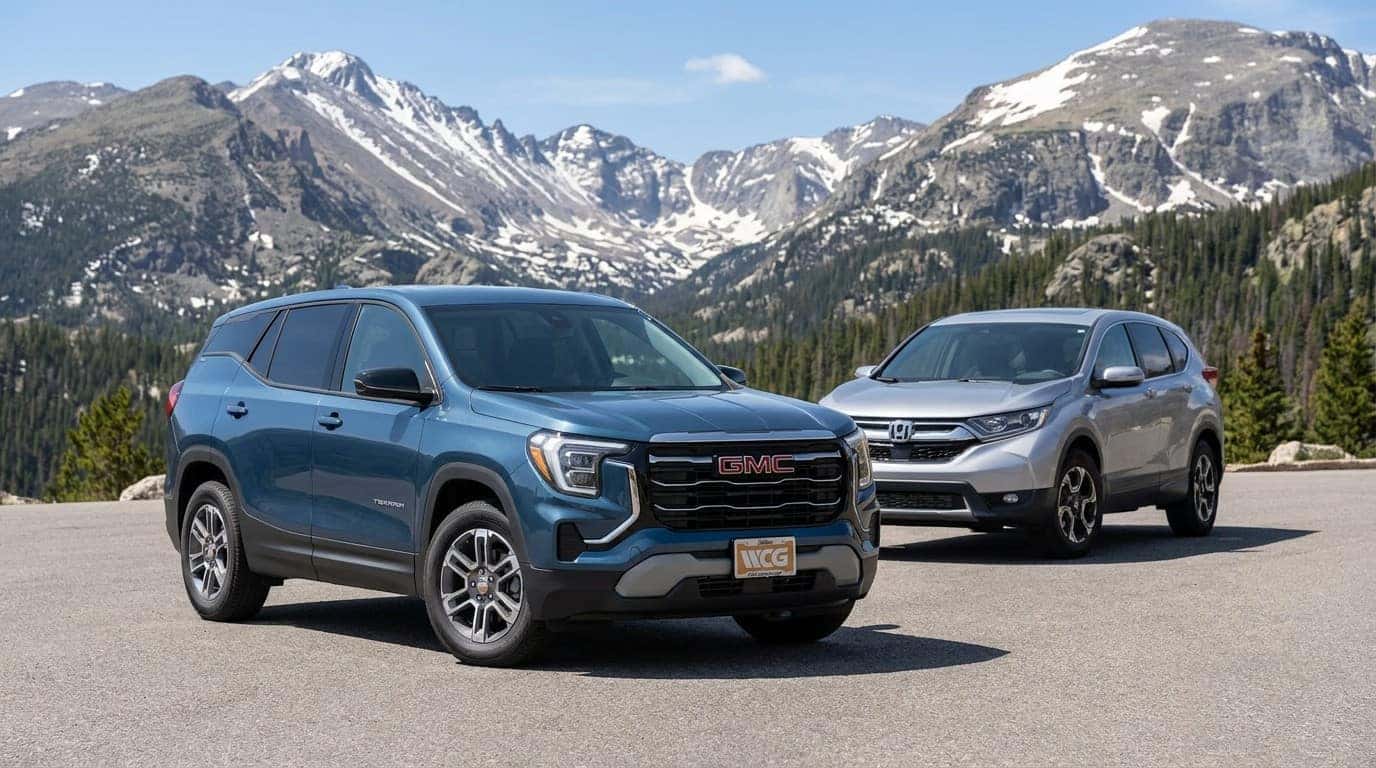
The 2026 Toyota RAV4 goes hybrid-only, making it a pure efficiency play. Meanwhile, the 2026 GMC Terrain doubles down on premium technology, premium interiors, and true hands-free driving. Both are solid compact SUVs for Colorado buyers—but they serve different priorities. This comparison is honest: we’ll show you where the RAV4 wins and where the Terrain dominates, so you can choose the right vehicle for your lifestyle.
Quick Answer
Choose the 2026 GMC Terrain for premium tech, Super Cruise, and a more refined interior; choose the Toyota RAV4 for hybrid fuel economy and its reliability reputation.
The RAV4 hybrid returns up to 47 MPG versus the Terrain’s 26 and offers a plug-in option with 48 electric miles. Both handle Colorado winters well.
Head-to-Head Analysis
Powertrain & Performance: Gas Turbo vs Hybrid
This is where the two vehicles diverge most. The 2026 RAV4 is hybrid-only—there is no gas-only option. The 1.5L 4-cylinder paired with electric motors produces 226 hp (236 hp AWD) and delivers smooth, quiet acceleration. For reference, Toyota’s RAV4 PHEV (plug-in hybrid) pushes 320 hp and offers 48-52 miles of electric-only range before the gas engine kicks in. The 2026 GMC Terrain sticks with its proven 1.5L turbocharged four-cylinder, making 175 hp and 184–203 lb-ft of torque depending on AWD configuration. The turbo engine is more aggressive off the line and feels punchier than the RAV4’s hybrid system, but it lacks the electric motor’s instant torque. Colorado altitude testing shows both handle the thin air at 10,000+ feet, though the RAV4 hybrid loses some of its efficiency advantage above 8,000 feet (thinner air, less oxygen for combustion). Winner: RAV4 for power and smoothness, Terrain for torque and driving feel.
Efficiency Comparison
Fuel Economy: RAV4 Hybrid Wins by a Landslide
This is RAV4’s knockout punch. EPA estimates: RAV4 Hybrid FWD hits 50/48/49 MPG (city/highway/combined). RAV4 Hybrid AWD reaches 47/40/43 MPG combined. Compare that to the Terrain AWD’s 22/27/26 MPG combined. That’s an 81% efficiency advantage for the RAV4. Over a year of 12,000 miles, at $3.50/gallon, the RAV4 saves roughly $2,100 annually on fuel. Over five years, that’s $10,500—more than enough to offset the small price difference. However, Colorado winter driving reduces the RAV4’s advantage; cold weather hampers hybrid efficiency and electric range, so real-world winter MPG drops to high-30s. The Terrain’s turbo engine is more resistant to temperature swings. On a pure efficiency basis, RAV4 wins decisively. Winner: RAV4 by far.
Technology Showdown
Technology & Infotainment: Where Terrain Pulls Ahead
The Terrain’s 15-inch Google Built-In infotainment screen is a significant step ahead of RAV4’s 10.5-inch unit. Google’s integration is seamless—Google Maps, Google Assistant, and Google Play work natively without phone mirroring lag. The Terrain also features an 11-inch digital driver cluster vs RAV4’s smaller gauges. Text is larger, maps are clearer, and menus are faster. Wireless CarPlay/Android Auto? Both have it. But the Terrain’s raw screen real estate and processing speed win on usability during long Colorado mountain drives. The bigger win is Super Cruise: Terrain AT4 and Denali offer GM’s hands-free highway driving system—the driver can literally release the wheel on mapped routes. RAV4 offers Toyota Safety Sense 3.0 (pre-collision, lane keep assist, dynamic cruise, road sign assist, lane departure warning, IntelliBeam headlights) on all trims, which is excellent but not hands-free. Toyota promised Teammate Advanced Drive, but it’s not yet standard on the 2026 RAV4. For I-25 commutes (Denver to Fort Collins), Super Cruise is a genuine convenience. Winner: Terrain.
Capability & Cargo
Towing, Cargo & Off-Road Capability
Towing: RAV4 hybrid rates 1,750 lbs (with tow package). RAV4 PHEV jumps to 3,500 lbs. Terrain caps at 1,500 lbs. RAV4’s hybrid is tighter on specs, but both are marginal for serious Colorado towing. For a 3,500 lb boat or small trailer, neither is ideal; a full-size truck is safer. Cargo: RAV4 offers ~69 cu ft behind the first row; Terrain offers 63.5 cu ft but includes a unique 8-foot pass-through (front passenger seat folds flat). For long items (lumber, kayaks), Terrain’s pass-through is a genuine advantage RAV4 doesn’t match. Off-Road: Terrain AT4 ($40,295) dominates. It has 8.7″ ground clearance, available all-terrain tires, dedicated Off-Road suspension, and exclusive Terrain Mode (crawl control, hill start assist, traction optimization). RAV4 Woodland ($45,300) offers all-terrain tires and Trail Mode, but sits lower and lacks the Terrain’s independent off-road engineering. For Colorado forest service roads (Weld County backcountry, Comanche Peak trailheads), Terrain AT4 is the more capable choice. Winner: RAV4 for basic towing (hybrid/PHEV) and cargo, Terrain for pass-through and off-road.
Interior & Pricing
Interior, Trim Levels & Pricing Strategy
Entry price: Terrain Elevation FWD starts $31,295; RAV4 LE (hybrid) starts $32,000—virtually tied. Terrain offers three trims (Elevation, AT4, Denali), while RAV4 offers seven (LE, XLE, Limited, Woodland, SE, XSE, GR Sport), plus PHEV variants. Interior quality: Terrain Denali ($42,395) features leather upholstery, Vader Chrome interior trim, ambient lighting, and panoramic sunroof. RAV4 XSE ($47,200) and Woodland ($45,300) offer leather and tech packages, but priced higher. At the Denali price point, Terrain offers a more premium interior experience than RAV4’s comparable trims—the Denali feels genuinely luxurious. Warranty: Both offer strong factory coverage (GM: 3yr/36k basic, 5yr/60k powertrain; Toyota: 3yr/36k basic, 5yr/60k powertrain, 8yr/100k hybrid battery). Winner: Terrain for interior luxury at the $40-42k price point; RAV4 for variety and entry affordability.
Side-by-Side Specs
Full Specification Comparison Table
| Metric | 2026 GMC Terrain | 2026 Toyota RAV4 (Hybrid) |
|---|---|---|
| Engine | 1.5L Turbo I4 | 2.5L I4 + Hybrid Motor |
| Horsepower | 175 hp | 226 hp (FWD) / 236 hp (AWD) |
| Torque | 184-203 lb-ft | 208-213 lb-ft |
| Transmission | CVT or 8-Speed AT | eCVT |
| Combined MPG (AWD) | 26 MPG | 43 MPG |
| Towing Capacity | 1,500 lbs | 1,750 lbs (Hybrid) / 3,500 lbs (PHEV) |
| Ground Clearance (AT4) | 8.7 inches | 8.6 inches (Woodland) |
| Cargo Volume | 63.5 cu ft (8-ft pass-through) | 69 cu ft |
| Infotainment Screen | 15″ Google Built-In | 10.5″ Toyota Audio |
| Hands-Free Driving | Super Cruise (AT4, Denali) | No equivalent (TSS 3.0 only) |
| Starting Price (AWD) | $31,295 (FWD Elevation) | $32,000 (LE Hybrid) |
| Warranty (Powertrain) | 5yr / 60k miles | 5yr / 60k miles (+ 8yr/100k Hybrid Battery) |
Colorado Context
Which Vehicle Wins for Northern Colorado Use Cases?
Winter Mountain Commute (Loveland to Denver via I-25): RAV4 Hybrid wins for fuel savings and efficiency. However, winter temps below 32°F reduce hybrid battery efficiency by 10-15%, so real-world MPG drops to high-30s. Terrain compensates with lower entry price and superior winter traction control. For pure cost savings, RAV4 is the answer; for winter reliability and premium comfort, Terrain edges ahead. Rocky Mountain NP and Trail Access: Terrain AT4 dominates. 8.7″ clearance, all-terrain tires, and dedicated off-road suspension make it the better choice for Estes Park approaches and Bear Lake trails. RAV4 Woodland is respectable but less capable. Fuel Cost at Altitude (8,000–11,000 ft): Both vehicles lose efficiency above 8,000 feet due to thinner air. The RAV4 hybrid advantage shrinks here—at 10,000 feet, RAV4 real-world MPG drops to mid-30s; Terrain drops to mid-20s. The absolute savings difference narrows. Ranch / Agricultural Use (Weld County plains): Terrain’s torque (203 lb-ft) and all-terrain tires are better for rough ranch roads, trailer pulling, and dust-heavy environments. RAV4 is fine for paved ranch roads but less suited to rough terrain. I-25 / I-270 Commute (Greeley to Denver): RAV4 Hybrid wins for fuel economy and efficiency. However, Terrain’s Super Cruise (hands-free I-25 from Fort Collins to Denver) is a genuine convenience for daily commuters. Local Service: Weld County Garage GMC (Greeley) provides immediate Terrain service. Toyota dealers are further away (Evans, Fort Collins). For quick maintenance and recalls, Terrain advantage. Luxury & Tech: Terrain Denali at $42,395 is more upscale than RAV4 XSE ($47,200). If you want premium interior and class-leading tech at a lower price, Terrain wins. Verdict: RAV4 Hybrid for pure commuting efficiency and fuel savings. Terrain for off-road capability, premium tech, and local service convenience. If you’re a Weld County resident who loves the mountains and wants the latest tech, Terrain is the smarter choice. If you’re a daily I-25 commuter focused solely on fuel cost, RAV4 Hybrid is the rational pick.
FAQ
Frequently Asked Questions
Is the RAV4 hybrid more reliable than the GMC Terrain?
Will the RAV4 hybrid battery last 10+ years in Colorado winters?
How much will you save on fuel with a RAV4 hybrid vs GMC Terrain over 5 years?
Can the RAV4 PHEV really tow 3,500 lbs on Colorado mountain grades?
Which vehicle is better for off-road / forest service roads in Colorado?
Does the 15″ Terrain screen make a big difference vs RAV4’s 10.5″?
What is Super Cruise and why doesn’t RAV4 have it?
Which vehicle is better for a winter commute from Loveland to Denver?
Can I lease either vehicle?
How much cargo does each vehicle hold?
Which compact SUV is cheaper to maintain?
Where can I test drive both vehicles in Greeley?
Ready to Compare These SUVs in Person?
Test drive the 2026 GMC Terrain at Weld County Garage GMC in Greeley. Our team can coordinate a RAV4 comparison or answer any questions about which compact SUV fits your Colorado lifestyle best.
Weld County Garage GMC | 2699 47th Ave, Greeley, CO 80634 | (970) 400-9952
0 comment(s) so far on 2026 GMC Terrain vs Toyota RAV4: Colorado Comparison