

2026 GMC Acadia Engine & Performance Guide | Weld County Garage GMC
2026 GMC Acadia Engine & Performance Guide: Everything Colorado Buyers Need to Know
By Ryan Green, Marketing Director — Weld County Garage GMC | Updated March 2026
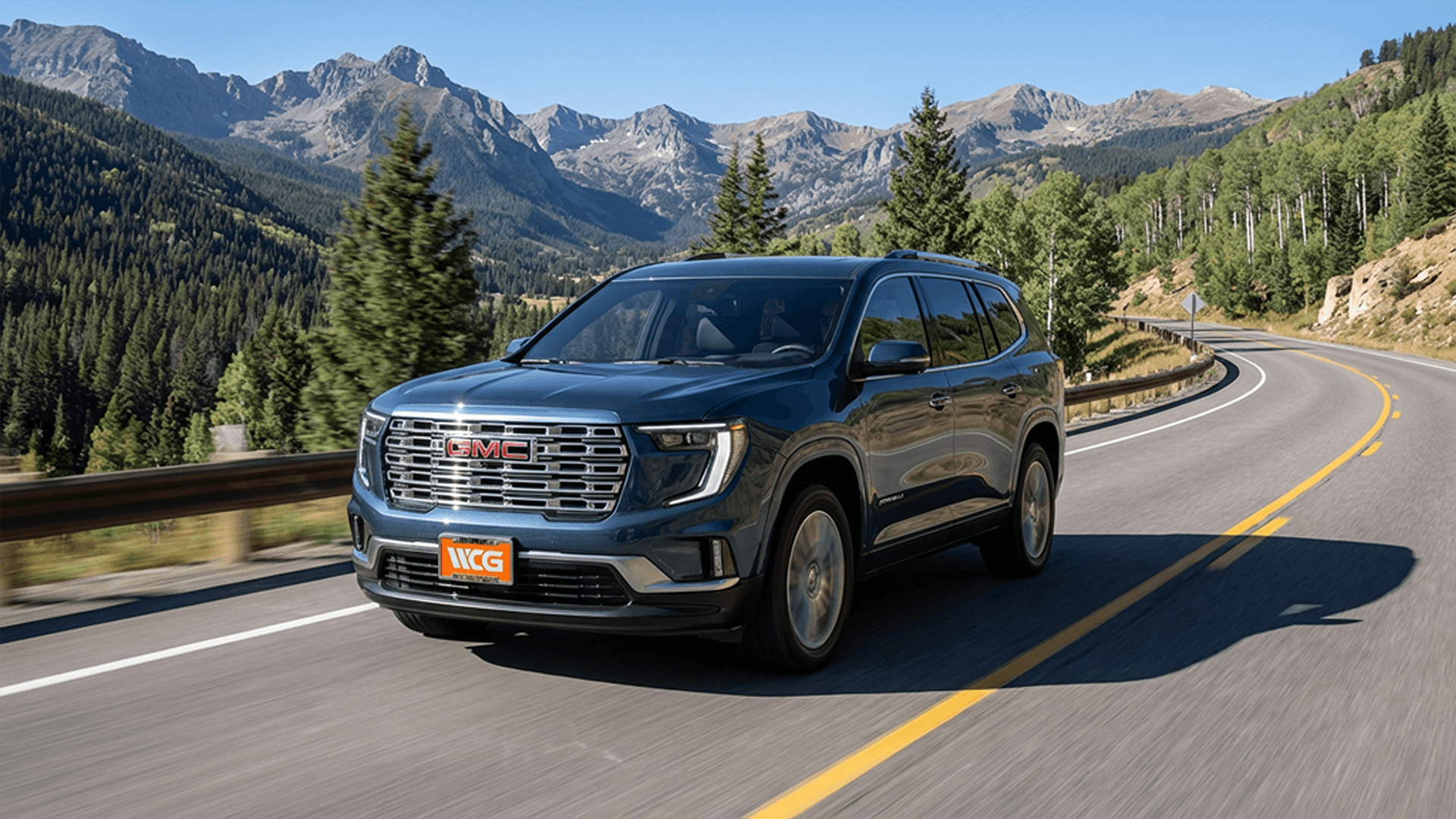
The 2026 GMC Acadia marks a major evolution for this three-row family SUV. The biggest story? GMC has replaced the previous generation’s V6 with a new turbocharged 2.5L 4-cylinder engine that makes MORE power while delivering significantly better fuel economy. This isn’t a downgrade—it’s a genuine upgrade that tells an important story about modern engine technology, especially when you’re driving in Colorado.
A turbocharged four-cylinder actually outperforms a naturally-aspirated V6 at Colorado’s high altitude. While thinner air at elevation saps power from traditional engines, the turbo compensates by forcing more oxygen into the combustion chamber, maintaining strong performance on mountain grades where you need it most. Add in the fact that this engine runs on regular 87-octane fuel and delivers impressive towing capacity for Colorado’s lakes and mountain campgrounds, and you’ve got a genuine advancement in SUV engineering.
Let’s dive into the specs, performance characteristics, fuel economy, and what this means for buyers across Northern Colorado.
At a Glance
The 2026 Acadia features a turbocharged 2.5L 4-cylinder with 328 hp and 326 lb-ft torque—more power than the old V6, better efficiency, and regular fuel.
All trims use the same engine, available in FWD or AWD (AT4 is AWD-only), with fuel economy ranging from 19–27 MPG depending on drivetrain. The 5,000-pound towing capacity requires the factory Trailering Package.
HORSEPOWER
328 HP
TORQUE
326 lb-ft
BEST HIGHWAY
27 MPG
MAX TOWING
5,000 lbs
The New Turbocharged 2.5L Four-Cylinder: More Power, Better Efficiency
For decades, the conventional automotive wisdom went like this: V6 engines mean power and space for a family SUV. Four-cylinder engines are for smaller cars trying to save gas. The 2026 GMC Acadia upends that assumption with a turbocharged 2.5L that proves modern engineering has changed the game.
Here’s the real story: The turbocharged 4-cylinder makes 328 horsepower and 326 lb-ft of torque—numbers that exceed the previous generation’s naturally-aspirated V6. This same engine achieves significantly better fuel economy, meaning you get more power and pay less at the pump. The engine spins the 8-speed automatic transmission through all gear ratios smoothly, whether you’re cruising I-25 north from Denver to Fort Collins or tackling steep grades on US-34 toward Loveland Pass.
Why Turbocharged? The Colorado Altitude Advantage
One reason GMC engineers chose a turbocharged 4-cylinder over keeping the V6: at Colorado’s elevation, naturally-aspirated engines struggle. Denver sits at 5,280 feet; Fort Collins and Greeley are just slightly lower. Loveland Pass tops out at 12,009 feet. Thinner air contains less oxygen, and naturally-aspirated engines can’t compensate. A V6 that makes 300 hp at sea level might only produce 270 hp in Denver.
The turbocharger changes that equation. By forcing pressurized air into the engine, the turbo maintains boost pressure even as external air density drops with altitude. This means the 2026 Acadia’s 328 hp stays closer to full power as you climb Colorado’s mountain passes. Mountain towing, long grades on I-70, and high-altitude cruising all benefit from the turbo’s consistent boost delivery.
The turbocharged engine also impacts your wallet. It runs on regular 87-octane gasoline instead of premium fuel. Many performance engines require premium to avoid engine knock, but GMC engineered the 2026 Acadia’s turbo to deliver strong performance on regular unleaded. Over a vehicle’s lifetime, choosing regular fuel saves hundreds of dollars compared to frequent premium fills at Colorado gas pumps.
The bottom line: this is a genuine upgrade. You get more power, better efficiency, and lower fuel costs than the previous generation—all from a smaller, more advanced engine.
Fuel Economy: Real-World MPG for Northern Colorado Drivers
EPA fuel economy estimates give you a framework, but real-world driving—especially in Northern Colorado—tells the complete story. The 2026 Acadia’s numbers vary significantly based on drivetrain and driving patterns.
EPA Fuel Economy Estimates
| FWD Models (Elevation, Denali, Denali Ultimate) | 20 city / 27 highway / 23 combined |
| AT4 AWD | 19 city / 24 highway / 21 combined |
| Denali AWD & Denali Ultimate AWD | 20 city / 27 highway / 23 combined |
What These Numbers Mean in Practice: If you’re an I-25 commuter between Greeley and Fort Collins, you’ll likely see numbers near the highway estimates on flat stretches. The 27 MPG highway rating (for FWD and Denali AWD) is genuinely achievable on the smooth highway sections north of Fort Collins toward the Wyoming border.
Mountain driving tells a different story. Climbing I-70 west toward Vail or US-34 toward Loveland Pass, fuel economy drops noticeably. Heavy grades, elevation gain, and engine load while maintaining momentum all reduce efficiency. Plan for 18–20 MPG combined in serious mountain territory, especially with a trailer. The turbocharged engine remains strong on climbs (that’s the point of the turbo), but physics still applies: climbing 7,000+ vertical feet uses more fuel.
AWD vs. FWD Efficiency: The AT4’s AWD system costs about 2 MPG on the EPA cycle compared to FWD models. This reflects the mechanical losses of driving all four wheels and the system’s active power distribution. However, the Denali AWD and Denali Ultimate AWD maintain the same excellent highway mileage (27 MPG) as FWD, suggesting GMC engineers optimized those AWD systems for efficiency. The AT4’s lower numbers reflect its focus on traction and off-road capability rather than ultimate highway efficiency.
Real-world observation: Colorado drivers who mix I-25 commuting with occasional mountain trips report 21–23 MPG combined across a range of conditions. Winter driving—common in Colorado—reduces efficiency by about 2 MPG due to denser air, different fuel formulations, and increased rolling resistance from winter tires.
FWD vs. AWD: Which Drivetrain Is Right for You?
The drivetrain question hits at the heart of Colorado vehicle buying: do you need all-wheel drive, or is front-wheel drive sufficient? The answer depends on where you live, what roads you drive, and how often you encounter winter weather.
When FWD Makes Sense
Front-wheel drive is sufficient if you live in Greeley, Longmont, or the flatter parts of Northern Colorado and primarily drive I-25 and local roads. Good winter tires (not all-season; actual winter tires) and moderate winter driving skills let FWD handle most Colorado weather. FWD vehicles deliver better fuel economy and lower purchase price. The weight of the engine over the front wheels actually improves traction in snow on level roads.
FWD is also appropriate if you rarely venture above 8,000 feet elevation and avoid winter mountain driving. A weekend trip to Estes Park or Rocky Mountain National Park in summer? FWD handles that fine. I-70 toward the Vail ski area during a January snowstorm? That’s when FWD becomes riskier.
When AWD Becomes Wise
Choose AWD if you live in Fort Collins or anywhere west of I-25 and encounter winter weather regularly. The Front Range mountains mean winter storms hit harder and roads get snowier. AWD provides genuine traction advantages on slippery surfaces—not invincibility, but a meaningful safety margin.
Also choose AWD if you regularly drive I-70 to mountain destinations, navigate US-34 over Loveland Pass, or take Highway 9 toward Breckenridge. Winter visibility and road conditions on these corridors can deteriorate rapidly. AWD gives you confidence and genuine traction advantages in emergency maneuvers.
The Acadia’s available AWD systems—whether on Elevation, Denali, and Denali Ultimate, or standard on AT4—enhance both traction and handling dynamics. You’ll feel the difference in cornering stability and confidence during Colorado’s variable winter conditions.
The Bottom-Line Recommendation: Colorado buyers in Greeley, Loveland, Windsor, and Evans? FWD with quality winter tires is defensible. Fort Collins, Boulder area, and west toward the mountains? AWD is the safer, smarter choice. If you ever wonder whether to get AWD, that hesitation probably means you should just get it.
AT4 Performance: Colorado’s Off-Road-Ready Acadia
The 2026 GMC Acadia AT4 represents GMC’s answer to serious Colorado drivers who want capability beyond typical highway and winter driving. With exclusive Active Torque Control AWD and Terrain Mode, the AT4 is the family SUV option for buyers who occasionally venture onto rough roads, mountain fire roads, and challenging trails.
The AT4 comes exclusively in AWD. Unlike the Elevation, Denali, and Denali Ultimate trims that offer AWD as an option, you can’t get the AT4 in FWD. This is by design—GMC positions the AT4 as a dedicated all-terrain variant with systems optimized for off-road traction.
Active Torque Control AWD System
The AT4’s Active Torque Control system dynamically transfers power between the front and rear wheels in real time. Sensors monitor wheel slip, traction, and driving conditions, automatically adjusting the torque split to maximize grip. This happens continuously and invisibly during normal driving, engaging more rear power when traction is needed.
Compared to standard AWD that statically splits power (often 90/10 front-to-rear or continuously variable within a range), Active Torque Control offers more aggressive, quicker response. On rough terrain, this means better wheel articulation and traction. On pavement, it enhances cornering stability and removes the understeer you might feel with a statically biased AWD system.
Terrain Select and AT4-Exclusive Modes
The AT4 features an available Traction Select System that lets you choose driving modes optimized for specific terrain. These include:
- Auto: Default mode for mixed on-road driving
- Snow/Slippery: Optimized traction and stability on icy and snowy surfaces
- Mud/Ruts: Maximizes rear wheel torque and diff lock behavior for muddy terrain
- Rock: Enables crawl control and maximum articulation for rocky, technical terrain
For Colorado drivers, Snow/Slippery mode is immediately useful during winter months. Mud/Ruts becomes relevant if you explore Colorado’s many rough forest roads accessing trailheads in the national forests. Rock mode is the most specialized; it’s useful for genuine technical off-roading in places like the San Juan Mountains or rougher Jeep trails.
What the AT4 Can and Cannot Do: The AT4 is exceptionally capable for light-to-moderate off-roading. It can handle rough fire roads, rocky mountain tracks, and challenging terrain that would make standard SUVs nervous. However, it’s not a rock crawler. It lacks the extreme articulation of purpose-built off-road vehicles, higher ground clearance than highway SUVs, and locking differentials at all four corners.
The practical Colorado use case: The AT4 excels when you want to explore rough roads to Colorado fishing spots, reach high-elevation trailheads without pavement, or confidently tackle challenging winter conditions. You’re not running the Rubicon Trail or competing in rock crawling events, but you’re absolutely comfortable on technical terrain that would concern drivers in standard family SUVs.
Towing with the 2026 Acadia: What Can It Pull?
Colorado’s lakes, mountains, and campgrounds are destinations for family adventures. Whether you’re pulling a boat to Shadow Mountain Reservoir, a horse trailer to a mountain ranch, or a camper up I-70, the 2026 Acadia’s towing capacity matters. Let’s break down what you need to know.
Key Towing Spec
5,000 pounds (with factory Trailering Package)
The 5,000-pound rating includes transmission cooler, integrated trailer braking controller, hitch receiver, and specific rear suspension tuning. Without the Trailering Package, capacity is lower. The package is essential for serious towing.
What 5,000 Pounds Means in Real Terms:
- Small Fishing Boats (16–18 feet): Most small boats in this range weigh 2,000–3,500 pounds, well within the Acadia’s capacity. A dual-axle trailer adds 1,000–1,500 pounds, still manageable.
- Horse Trailers: Two-horse aluminum trailers typically weigh 3,500–4,200 pounds. The Acadia handles this, though you’re using most of your capacity. Three-horse trailers exceed the limit.
- Compact Camping Trailers: Small travel trailers (18–22 feet dry weight) run 3,500–4,500 pounds, fitting comfortably within the 5,000-pound rating.
- What It Can’t Do: Full-size travel trailers (30+ feet, 8,000+ pounds), large boat cruisers (25+ feet), or utility trailers with ATVs push beyond the Acadia’s limits. The Denali and Denali Ultimate can tow the small camper you love; they can’t pull the RV everyone wishes they owned.
Mountain Towing Considerations for Colorado
Towing in the mountains presents challenges different from flat terrain. Elevation, long grades, and temperature all impact engine and transmission performance.
Engine Performance: The turbocharged 2.5L maintains its advantages at altitude. While a naturally-aspirated engine loses towing power climbing toward Loveland Pass or over Vail Pass, the turbocharger sustains boost pressure, delivering consistent power for uphill towing. This is genuinely better than previous generation V6 performance on the same grades.
Transmission Cooler: The Trailering Package includes a transmission cooler. This is essential in Colorado because climbing long mountain grades (especially when towing) heats the transmission fluid rapidly. A cooler prevents transmission damage from overheating. Without the cooler, the transmission is at risk on sustained upgrades above 8,000 feet with a full load.
Engine Braking: When descending from Loveland Pass or exiting I-70 westbound near Breckenridge, the 8-speed transmission provides multiple engine braking options through lower gears. This lets you maintain control without riding the brakes for long periods. Riding brakes overheats them; using engine braking and lower gears is the safest technique for mountain descents with a trailer.
Driving Technique: Maintain conservative speeds on steep grades. Towing a 4,000-pound trailer up the Vail Pass grade at 65 MPH pushes the engine, transmission, and brakes hard. Dropping to 50–55 MPH significantly reduces strain and keeps everything cooler, even if it takes a few minutes longer. Safety and reliability matter more than schedule.
Bottom line: The 2026 Acadia’s 5,000-pound towing capacity (with Trailering Package) is genuine and well-matched to the turbocharged engine. It handles most small-to-midsize boats, horse trailers, and compact campers. Mountain towing is a strength of the turbo engine due to consistent power at altitude, but respect the transmission cooler requirement and use proper descending technique on Colorado’s mountain passes.
Performance at Colorado Altitude: Why the Turbocharged Engine Wins
Colorado’s elevation profile is unique across the United States. From Greeley at 4,610 feet to Fort Collins at 5,003 feet, you’re already a mile high before many Colorado drivers even think about it. Drive west of Boulder, and elevation climbs rapidly: Nederland is 8,236 feet; Loveland Pass is 12,009 feet; mountain passes on I-70 approach 11,000 feet. This elevation changes everything about how engines perform, and it’s why the 2026 Acadia’s turbo is engineered as a genuine upgrade.
The Altitude Power Loss Problem (And How Turbos Solve It)
A naturally-aspirated engine breathes ambient air. At sea level (Denver), that air is dense: 0.002377 kg/m³. At 10,000 feet (Loveland Pass), air density drops to 0.001891 kg/m³—about 20% less oxygen. An engine that makes 300 hp at sea level might only make 240 hp at high elevation because there’s simply less oxygen for combustion. This is why towing and passing feel harder at altitude in normally-aspirated vehicles.
A turbocharged engine compensates by forcing pressurized air into the cylinders. The turbo’s compressor doesn’t care that external air is thin—it forces more molecules into the engine regardless. At altitude, a turbocharged engine maintains closer-to-original power levels because the turbocharger boosts its pressure to maintain air mass flow. The 2026 Acadia’s turbo is engineered to deliver its full 328 hp across Colorado’s entire elevation range, from Greeley to Loveland Pass.
Real-World Consequence: The previous generation’s V6 lost noticeable power climbing I-70 toward the mountains. Drivers felt it: acceleration lessened, towing felt labored, and passing maneuvers required more planning. The 2026 Acadia’s turbo doesn’t eliminate altitude effects entirely—thermodynamics still apply—but it maintains strong power where the old V6 would have felt significantly weakened.
I-70 Vail Pass Case Study: Climbing Vail Pass (eastbound grade approaching 11,000 feet) from the I-70/I-25 split in Denver to the Vail valley is the ultimate Colorado engine test. The grade is sustained: 7–8% uphill for several miles. At that elevation, with that grade, plus towing a 4,000-pound trailer, the Acadia’s turbocharged engine maintains acceptable power and momentum. An older naturally-aspirated V6 under the same load would have felt exhausted, running at near-maximum power continuously.
Why This Matters for Colorado Safety: Maintaining adequate power and engine braking capability on Colorado’s long mountain grades is a safety issue, not just a comfort feature. When you can’t climb a grade at a reasonable pace, you’re vulnerable to traffic buildup, rear-end collision risk, and brake fade from overheating. The Acadia’s turbocharged engine keeps you moving at safer speeds on Colorado’s mountains, which directly improves highway safety for you, your family, and everyone sharing the road.
The 2026 GMC Acadia’s turbocharged engine is specifically engineered for Colorado’s high-altitude driving. This isn’t a marketing claim; it’s fundamental engineering advantage. If you live in Colorado and you’re comparing the 2026 Acadia to older models or other turbocharged vehicles, understand that the turbo is legitimately your friend on mountain passes, long grades, and towing scenarios. It’s a tangible real-world upgrade that Colorado drivers benefit from daily.
Frequently Asked Questions About 2026 Acadia Performance
Related Buying Guides & Resources
Learn more about the 2026 GMC Acadia with these comprehensive guides:
- 2026 GMC Acadia Trim Levels Explained — Compare Elevation, AT4, Denali, and Denali Ultimate
- 2026 GMC Acadia Technology & Features Guide — Infotainment, driver assistance, and connectivity
- 2026 GMC Acadia Towing & Cargo Guide — Detailed capacity specs and usage recommendations
- 2026 GMC Acadia Safety Features Guide — Crash test ratings and advanced safety systems
- 2026 GMC Acadia Colorado Buyers Guide — Regional buying considerations for Northern Colorado
- 2026 GMC Acadia Denali Ultimate Deep Dive — Luxury trim walkthrough
- 2026 GMC Acadia vs. Ford Explorer — Head-to-head comparison
- 2026 GMC Acadia vs. Jeep Grand Cherokee L — Capability and price comparison
- 2026 GMC Acadia Hub — All guides and resources in one place
- GMC Acadia Overview — Multi-year Acadia coverage and buying advice
Weld County Garage GMC — Greeley, CO
Ready to Find Your Acadia?
Visit us at 2699 47th Ave, Greeley, CO 80634 or call 970-400-9952. Serving Greeley, Fort Collins, Loveland, Windsor, and all of Northern Colorado.
Weld County Garage GMC is an authorized GMC dealer serving Northern Colorado. All vehicle specs and pricing are current as of March 2026. Please contact us or visit your local GMC dealer for the most up-to-date information and current promotions.
0 comment(s) so far on 2026 GMC Acadia Engine & Performance Guide | Weld County Garage GMC