

2026 GMC Acadia Towing & Cargo Guide | Weld County Garage GMC
2026 GMC Acadia Towing & Cargo Guide: What Can It Haul?
By Ryan Green, Marketing Director — Weld County Garage GMC | Updated March 2026
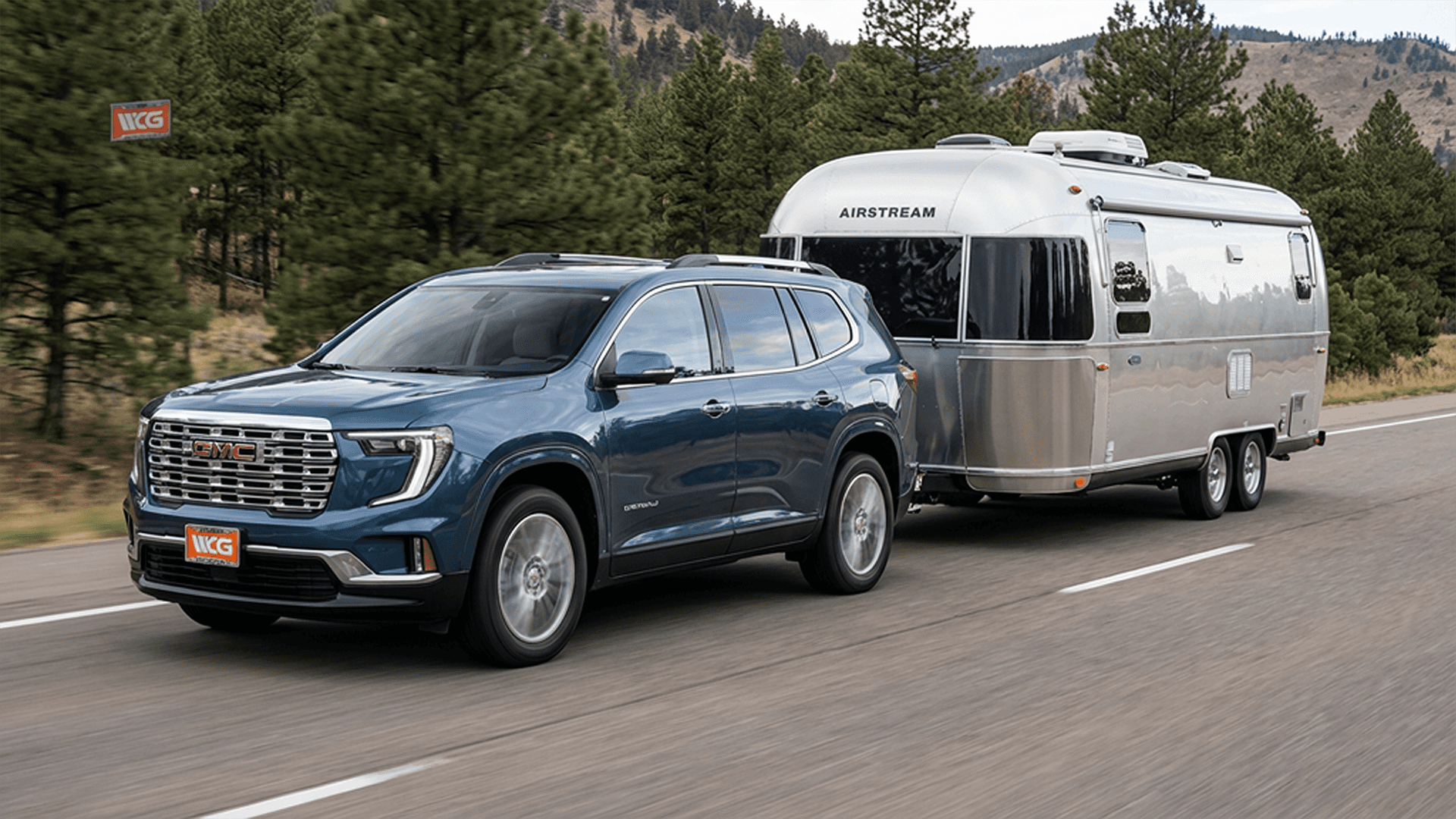
For Colorado families who love the outdoors, the question isn’t just “can I tow?” but “what does 5,000 pounds actually mean?” That number—the 2026 GMC Acadia’s maximum towing capacity—translates to the freedom to launch your 19-foot fishing boat at Horsetooth Reservoir, pull a comfortable camping trailer to Great Sand Dunes, or load up a horse trailer for weekend adventures in the Rocky Mountains. This guide breaks down exactly what the Acadia can handle, how it performs at Colorado’s high altitude and steep grades, and which trim makes sense for your family’s lifestyle.
At a Glance
How much can the 2026 Acadia tow?
The 2026 GMC Acadia reaches its maximum towing capacity of 5,000 pounds when equipped with the factory Trailering Package. This capacity is available on all trim levels: Elevation, AT4, Denali, and Denali Ultimate. The turbocharged 2.5L 4-cylinder engine delivers 328 hp and 326 lb-ft of torque, paired with an 8-speed automatic transmission.
Max Towing
5,000 lbs
Max Cargo
97.5 cu ft
Passengers
8 (Elevation)
Horsepower
328 hp
2026 Acadia Towing Capacity: The Details
The 2026 GMC Acadia reaches its 5,000-pound maximum towing capacity when you equip it with the optional factory Trailering Package. This isn’t a base-model limitation—every Acadia trim level (Elevation, AT4, Denali, and Denali Ultimate) can achieve this rating.
Without the Trailering Package, the Acadia’s towing capacity is not recommended for serious hauling. The package is worth the investment if towing is part of your plan.
What’s Included in the Trailering Package?
- Class II Tow Hitch: Rated for 5,000 lbs of towing and 500 lbs of tongue weight
- Integrated Trailer Sway Control: Helps stabilize the trailer on highways and mountain roads
- Integrated Trailer Backup Guide: Helpful when parking at campgrounds or boat ramps
- Trailer Brake Controller Integration: Ready for electric or hydraulic trailer brakes
- Power-Adjustable Pedals: Better ergonomics when towing in mountain terrain
- Integrated Rear View Camera: Assists with trailer hookup and sight lines
What Can You Tow with 5,000 Pounds?
Five thousand pounds sounds impressive, but what does it actually mean for your Colorado outdoor adventures? Here’s the reality:
Fishing Boats
An average 19-foot fishing boat weighs 3,000–3,500 lbs (dry weight). With a boat trailer, fuel, and tackle, you’re looking at 3,500–4,000 lbs total. The Acadia handles this comfortably. Popular Colorado fishing destinations like Horsetooth Reservoir, Lake John, and Echo Lake are within reach with an Acadia towing a typical fishing boat.
Camping Trailers
Small to mid-size travel trailers typically weigh 3,000–4,500 lbs. Brands like Forest River R-Pod or Jayco Hummingbird models fit perfectly. You can comfortably tow these to Great Sand Dunes, Gunnison National Forest, or the San Juan Mountains. Heavier trailers (5,000+ lbs) will be right at or over the Acadia’s limit—always verify dry weight before purchasing.
Jet Ski / Watercraft Trailers
Single or dual jet ski trailers typically weigh 1,500–2,000 lbs. The Acadia is ideal for pulling these to Piney Lake, Dillon Reservoir, or Bear Lake. You’ll have plenty of capacity left over for passengers and cargo.
Horse Trailers
Single-horse trailers typically weigh 4,000–5,000 lbs (dry). The Acadia reaches the upper limit here—it’s possible to tow a 1-horse trailer, but a 2-horse trailer (6,000–7,000 lbs) exceeds capacity. Verify exact weight with the trailer manufacturer before committing.
Important: These numbers are dry weights. Always add the tongue weight of the trailer (typically 10–15% of total trailer weight) and account for cargo, fuel, and passengers in the vehicle. Never exceed the Acadia’s 5,000 lb towing limit.
Mountain Towing in Colorado: What Acadia Owners Need to Know
Towing through Colorado’s mountains is a different beast than towing on the plains. The Acadia’s turbocharged 2.5L engine performs well at altitude, but there are critical factors every Colorado owner should understand.
Turbocharging at Altitude
The good news: turbocharged engines maintain boost pressure better at altitude than naturally aspirated engines. The Acadia’s turbo will help you climb I-70 toward Vail or Trail Ridge Road toward Estes Park. The reality: you’ll still experience slightly reduced power in the thin air above 8,000 feet. On steep grades carrying a trailer, expect the engine to work harder and consume more fuel. Shifting into lower gears early prevents excessive strain.
Transmission Heat Management
The 8-speed automatic transmission in the Acadia generates significant heat when towing through sustained mountain grades. On the climb to Leadville or through the grades near Cucharas Pass, use the transmission’s lower gears (or manually select gears if available) instead of relying on overdrive. This reduces internal friction and heat. If you see the transmission temperature warning, pull over and let it cool—continuing with an overheating transmission risks damage.
Brake Fade on Descents
This is critical: never ride the service brakes while towing down mountain grades. Descending from Monarch Pass, Cottonwood Pass, or any long grade, use the transmission’s engine braking in a lower gear. Modern Acadia transmissions will do most of the braking work—the service brakes cool and stay effective for emergencies. Continuously using service brakes generates extreme heat and can cause brake fade (reduced stopping power). If you’re pulling a trailer with hydraulic brakes, a properly adjusted trailer brake controller distributes braking between the trailer and vehicle, protecting both systems.
Trailer Sway Control in Crosswinds
The included Trailer Sway Control helps stabilize the combination on highways. At higher elevations, sudden wind gusts (especially in mountain passes like US-34 near Grand Lake or US-285 through South Park) can cause trailer sway. The system will brake individual wheels to counteract sway—trust it. If sway occurs, ease off the accelerator and let the system work. Aggressive steering inputs can make sway worse.
Pro Tip: Trailer Brake Controller
If your trailer has electric or hydraulic brakes, invest in a quality trailer brake controller. Many Colorado boat ramps, campgrounds, and trailheads sit at elevation with steep grades. A controller proportionally applies trailer brakes when the vehicle brakes, protecting both systems and giving you safer control on descents.
Cargo Space: 3-Row vs 2-Row Configurations
Not all 2026 Acadias are created equal when it comes to cargo. The Elevation trim offers a 3-row option, while AT4, Denali, and Denali Ultimate are 2-row only. This decision impacts both seating and cargo flexibility.
Elevation 3-Row (8 Passengers)
Cargo behind 3rd row: 23.0 cubic feet (useful for groceries and small gear)
3rd row folded: Additional space for camping equipment, hiking gear, or a cooler
All seats folded: 97.5 cubic feet—essentially a cargo hauler. Perfect for moving camping trailers’ overflow, loading up equipment for an extended mountain trip, or transporting bike racks and outdoor gear.
AT4 / Denali / Denali Ultimate 2-Row (7 Passengers)
No third row means the rear cargo area is always ready for gear. You don’t sacrifice passenger space to gain cargo flexibility—every configuration offers useful storage. Better for families who prioritize cargo over a third row of occasional seating.
Which configuration for Colorado? Families with 5+ regular occupants and active outdoor lifestyles benefit from the 3-row Elevation’s flexibility. Families with 4–5 regular occupants prefer the 2-row models’ superior cargo space and easier access (no third-row seats to fold).
Which Acadia Trim Is Best for Towing and Hauling?
All 2026 Acadia trims reach the same 5,000 lb towing capacity with the Trailering Package. But each trim has distinct advantages for towing. Here’s the breakdown:
| Trim | Seating | Max Cargo | Drivetrain | Towing | Best For |
|---|---|---|---|---|---|
| Elevation | 8 | 97.5 cu ft | FWD or AWD | 5,000 lbs | Families needing 3 rows + budget-conscious |
| AT4 | 7 | 97.5 cu ft | AWD only | 5,000 lbs | Colorado outdoor enthusiasts (boat ramps, trailheads) |
| Denali | 7 | 97.5 cu ft | FWD or AWD | 5,000 lbs | Luxury + towing (long road trips) |
| Denali Ultimate | 7 | 97.5 cu ft | FWD or AWD | 5,000 lbs | Premium luxury + performance |
The AT4 Advantage
For Colorado outdoor lifestyles, the AT4 stands out. Standard AWD (not optional) means you can confidently access rough boat ramps, muddy campgrounds, and high-altitude trailheads. The slightly rugged exterior design is more than aesthetic—it signals that this Acadia is built for real-world Colorado adventure. At $52,500 (vs. $43,800 for Elevation), it’s a meaningful investment, but for active families, the standard AWD justifies the cost.
How the Acadia Compares to the Competition for Towing
The 2026 Acadia is competitive in the 3-row SUV segment, but it’s not the towing leader. Here’s honest context:
Ford Explorer (2026)
Towing capacity: 5,600 lbs with the 3.0L twin-turbo EcoBoost engine. The Explorer edges out the Acadia by 600 lbs. If maximum towing is your only concern, the Explorer wins.
Jeep Grand Cherokee L (2026)
Towing capacity: 6,000 lbs with the standard 3.6L Pentastar V6 (or up to 6,200 lbs with the optional 5.7L V8). The Grand Cherokee L significantly outclasses the Acadia for towing. However, the Grand Cherokee L lacks a 3-row option and is priced higher ($59,000+).
The Acadia’s advantage? It balances towing (5,000 lbs is solid for smaller boats, campers, and horse trailers), cargo space (97.5 cu ft is expansive), passenger comfort, and fuel efficiency better than competitors. It’s not the towing king, but it’s a smarter choice for Colorado families who tow occasionally and prioritize daily drivability and value.
Frequently Asked Questions
Pricing and Trim Levels
Here’s where the 2026 Acadia trims align in pricing:
Elevation
$43,800
Starting price with 3-row seating
AT4
$52,500
Standard AWD, rugged styling
Denali
$55,900
Luxury features and comfort
Denali Ultimate
TBD
Premium performance variant
Key Takeaways for Colorado Buyers
- 5,000 lbs is enough for most Colorado outdoor activities: fishing boats, camping trailers, jet skis, and single-horse trailers.
- The Trailering Package is essential for safe towing—it’s not optional if you plan to tow regularly.
- Mountain towing requires discipline: use lower gears, engine braking on descents, and monitor transmission temperature.
- The AT4 is the Colorado choice for outdoor families. Standard AWD justifies the $8,700 premium over Elevation for accessing remote trailheads and boat ramps.
- A trailer brake controller is worth it for Colorado’s steep grades and high elevations.
- 97.5 cubic feet of cargo space means you can pack gear for extended mountain adventures beyond what your trailer carries.
Related Reading for Acadia Shoppers
Trim Levels Explained
Technology Features
Engine Performance
Safety Features
Colorado Buyers Guide
Denali Ultimate Deep Dive
Acadia vs Ford Explorer
Acadia vs Jeep Grand Cherokee L
GMC Acadia Pillar
Weld County Garage GMC — Greeley, CO
Ready to Find Your Acadia?
Visit us at 2699 47th Ave, Greeley, CO 80634 or call 970-400-9952. Serving Greeley, Fort Collins, Loveland, Windsor, Evans, and all of Northern Colorado.
0 comment(s) so far on 2026 GMC Acadia Towing & Cargo Guide | Weld County Garage GMC