

2026 GMC Sierra 2500HD Towing & Capability: 22,500-lb Ratings Explained for Colorado Drivers
2026 GMC Sierra 2500HD Towing & Capability: 22,500-lb Ratings Explained for Colorado Drivers
By Ryan Green, Marketing Director | Weld County Garage GMC | Published March 13, 2026
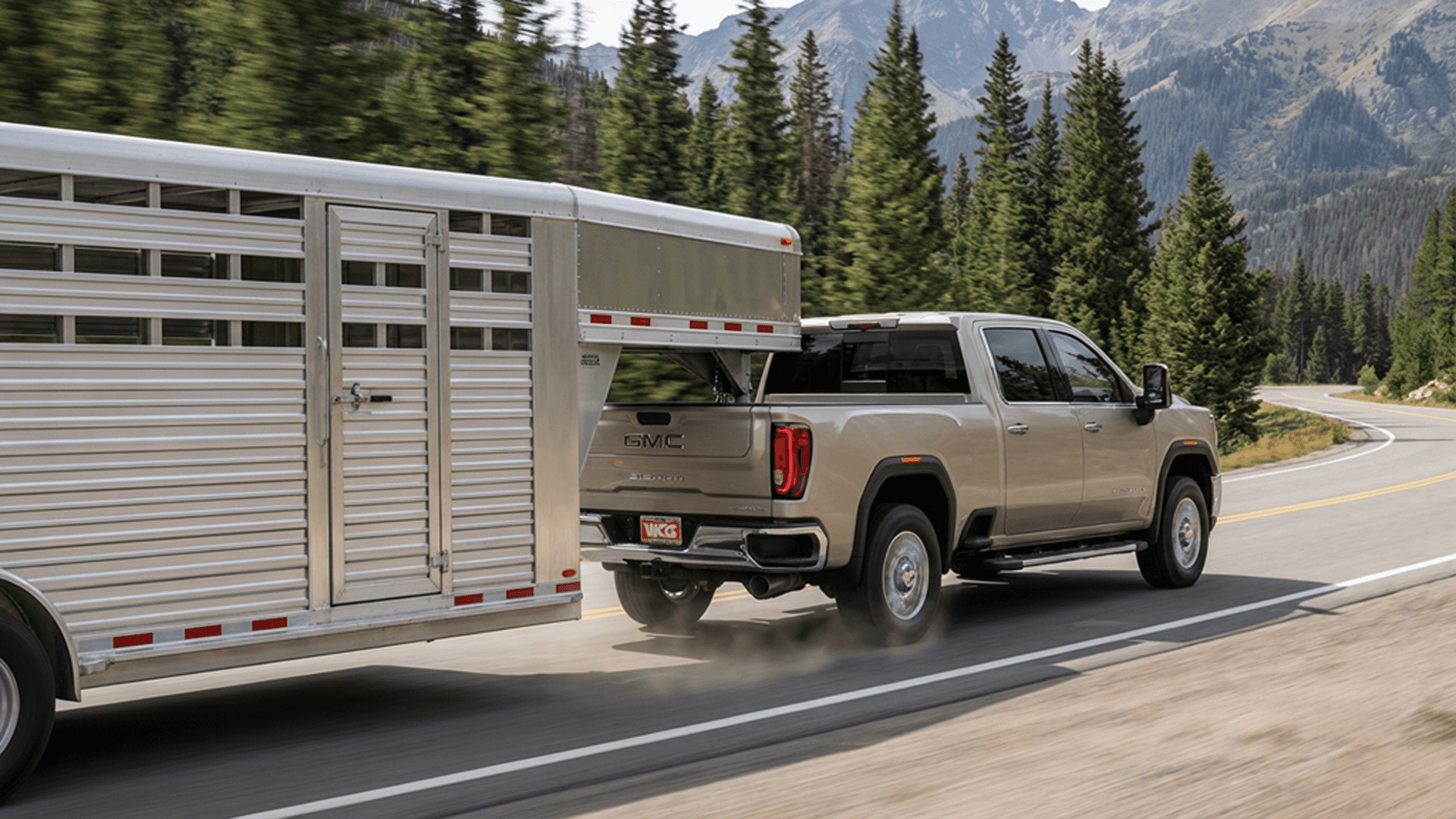
If you’re shopping for a heavy-duty truck in Northern Colorado—whether you’re managing a ranch in Weld County, running a construction crew, or towing recreational equipment up mountain passes—towing capacity isn’t just a spec sheet number. It’s the difference between pulling confidently through I-70 mountain grades or struggling on steep inclines. The 2026 GMC Sierra 2500HD delivers class-leading towing with a maximum capacity of 22,500 lbs using a gooseneck or fifth-wheel hitch, powered by the legendary Duramax 6.6L Turbo-Diesel V8 with 975 lb-ft of torque. Let’s break down what these numbers mean for your Colorado hauling needs.
Direct Answer: The 2026 Sierra 2500HD offers a maximum towing capacity of 22,500 lbs (gooseneck/5th wheel) or 20,000 lbs (conventional hitch), paired with a 3,759-lb payload capacity. These industry-leading ratings are achieved with the Duramax 6.6L Turbo-Diesel, Allison 10-speed transmission, and the Heavy-Duty Trailering Package. Performance varies with engine choice and Colorado’s altitude—the gas V8 maxes around 18,000 lbs, while the diesel dominates across elevation and temperature ranges.
22,500
Max Towing (Gooseneck)
975
Duramax Torque (lb-ft)
3,759
Payload Capacity (lbs)
+25%
2026 Duramax Torque Bump
Understanding Maximum Towing Capacity
The Sierra 2500HD’s 22,500-lb max towing rating isn’t a blanket number—it’s conditional. This figure applies specifically to gooseneck or fifth-wheel towing configurations using the Duramax diesel engine. Why the difference between 22,500 lbs and 20,000 lbs? It all comes down to how weight is distributed over the truck’s frame and axles.
Gooseneck and fifth-wheel hitches mount directly in the truck bed, placing a significant portion of the trailer’s weight over the rear axles and bed frame. This distribution allows heavier loads because the truck’s design is engineered to handle concentrated weight in that location. The load path is more direct and predictable.
Conventional bumper or frame-mounted hitches attach at the rear of the frame, placing all trailer weight at the very back of the truck. This creates more leverage on the suspension and can cause the rear to sag or the front wheels to lift under extreme load. Consequently, conventional towing ratings are lower—the Sierra 2500HD maxes out at 20,000 lbs with a bumper hitch.
Engine Choice: Gas vs. Duramax Diesel
Two engines power the 2026 Sierra 2500HD, and your choice dramatically affects towing performance.
6.6L V8 Gas Engine: 401 hp / 464 lb-ft Torque
The gas V8 is lighter, cheaper, and more fuel-efficient than diesel. It pairs well with trucks used primarily for light to moderate towing (boats under 10,000 lbs, utility trailers, small livestock trailers). The Sierra 2500HD gas engine maxes out around 18,000 lbs conventional towing and approximately 19,500 lbs with a gooseneck setup. For Weld County ranchers or contractors looking to pull smaller equipment trailers around the county, the gas engine is perfectly adequate and saves money at the pump.
Duramax 6.6L Turbo-Diesel V8: 470 hp / 975 lb-ft Torque
The Duramax is the powerhouse. With 975 lb-ft of torque—the highest in the class—the diesel dominates heavy towing. The 2026 model year saw a 25% torque increase at lower RPM, meaning the engine pulls harder at lower speeds (exactly when you need it climbing Colorado mountain passes or hauling from standstill). Paired with the Allison 10-speed automatic transmission, the Duramax achieves the full 22,500-lb gooseneck/fifth-wheel rating and 20,000-lb conventional towing.
For serious hauling in Northern Colorado—oil and gas equipment in Weld County, livestock or hay trailers, recreational vehicles, or mountain towing—the Duramax is the better investment. Diesel also delivers superior torque in thin Colorado air, performs better in winter, and maintains consistent power during long mountain climbs.
What You Need to Reach Max Towing Ratings
Achieving the 22,500-lb rating isn’t automatic—you need specific options:
- Duramax 6.6L Turbo-Diesel engine (required)
- Allison 10-speed automatic transmission (pairs with Duramax)
- Heavy-Duty Trailering Package (includes integrated trailer brake controller, hitch wiring, fifth-wheel/gooseneck prep)
- Gooseneck or fifth-wheel hitch assembly (aftermarket or dealer-installed)
- Integrated trailer sway control (standard on all trims)
If you skip the Heavy-Duty Trailering Package or pair the Duramax with a conventional bumper hitch, your towing capacity drops to 20,000 lbs. If you choose the gas engine, you’re looking at roughly 18,000–19,500 lbs max. The investment in the Duramax and trailering package pays dividends if you regularly haul heavy loads across Colorado.
Payload: The Other Critical Number
While towing capacity gets attention, payload capacity is equally important for real-world truck work. The 2026 Sierra 2500HD carries a maximum payload of 3,759 lbs. This is the total weight you can load into the bed, cabin, and any aftermarket racks—including passengers, gear, fuel, and equipment.
Let’s put this in practical terms for Colorado work:
- Crew of four (600 lbs) + tools and equipment (400 lbs) + 50 gallons of fuel (300 lbs) = 1,300 lbs (well within range)
- Livestock operation: Crew + portable panels (500 lbs) + feed/salt (600 lbs) = 1,700 lbs
- Construction contractor: Two workers + power tools, ladder racks, materials = approximately 2,000 lbs (manageable)
- Oil and gas service crew: Specialized equipment, spare parts, safety gear = 2,500–3,500 lbs (approaches maximum)
The payload capacity applies to the truck when empty—no trailer attached. Once you hitch a trailer, you’re limited by towing capacity, not payload. But for single-truck loads (bed only), the 3,759-lb payload gives you substantial hauling flexibility for typical Weld County ranch and contractor work.
Colorado Mountain Towing: Altitude and Grades
Colorado presents unique towing challenges. The Front Range—from Greeley through Fort Collins, Loveland, and Boulder—sits around 4,500–5,500 feet elevation. But anyone who regularly hauls loads knows the real test: mountain passes and high-elevation grades.
Thin Air and Engine Performance
At sea level, the Duramax produces 470 hp. At 11,000 feet (Loveland Pass, Vail Pass), air density drops significantly, and the engine produces roughly 20–25% less power. The rated towing capacity of 22,500 lbs is a sea-level figure. When you’re pulling a heavy gooseneck over Loveland Pass or climbing I-70 toward the Eisenhower Tunnel (11,158 feet), you’re operating at reduced power.
This is why the Duramax excels in Colorado: the turbocharger compensates for thin air better than naturally aspirated gas engines. The gas V8 loses more power at altitude. If mountain towing is part of your routine (say, pulling equipment to high-elevation ranches or campgrounds), the Duramax’s turbo advantage pays for itself in confidence and reliability.
I-70 Mountain Grades: 6–7% Descents
Interstate 70 westbound from Denver climbs steadily. The Vail Pass approach has sections averaging 5–7% grade for several miles. With a heavy trailer, descending those same grades requires serious braking. This is where the exhaust brake becomes invaluable. Available on the Duramax, the exhaust brake restricts exhaust flow, using engine compression to slow the truck. This keeps your wheel brakes cool and prevents fade during long descents.
Without an exhaust brake, riding the wheel brakes for 10+ miles of mountain descent can overheat the brake fluid and reduce braking effectiveness—a genuine safety hazard with a heavy load.
Trailer Sway Control on Mountain Roads
Colorado mountain roads—US-34 (Poudre Canyon), US-40, CO-14—feature tight curves, elevation changes, and wind gusts that can cause trailer sway. The Sierra 2500HD includes integrated trailer sway control (standard on all trims), which uses wheel brakes and traction control to stabilize the trailer if sway is detected. The system activates automatically, making mountain towing safer.
Real-World Towing Scenarios for Northern Colorado
Ranch and Agricultural Hauling
Weld County is ranching country. The 2026 Sierra 2500HD is a perfect fit for:
- Horse trailers: A quality horse trailer with four stalls fully loaded weighs 12,000–14,000 lbs. The Sierra 2500HD gas engine handles this easily; the Duramax makes it feel effortless.
- Hay wagons and grain wagons: A loaded hay wagon (1,000–2,000 lbs per bale × 100+ bales) can exceed 14,000 lbs. The Duramax is essential for reliable operation and quick turnarounds during harvest.
- Livestock trailers: Cattle trailers commonly weigh 12,000–16,000 lbs fully loaded. The Sierra 2500HD Duramax provides the control and power needed for safe livestock transport across Weld County’s back roads.
- Farm implement trailers: Combines, balers, and other equipment can weigh 15,000–20,000 lbs. For anything approaching max towing, you’ll want the Duramax and gooseneck hitch.
Oil and Gas Operations
Weld County is Colorado’s #1 oil-producing county. Thousands of workers operate in Weld County’s oil fields daily. The Sierra 2500HD is widely used by service companies, operators, and contractors for:
- Service equipment trailers: Carrying pumps, compressors, hoses, and specialized tools often requires 14,000–18,000-lb capacity. The Duramax is standard in this sector.
- Workover rigs and portable drilling gear: Heavier setups demand the full 22,500-lb gooseneck capability of the Duramax with a fifth-wheel hitch.
- Crew mobility: The Sierra 2500HD’s large cabin and comfortable interior keep crews alert during long hauls between sites across Weld County’s spread-out operations.
Recreational Towing in Northern Colorado
Not all towing is work-related. Northern Colorado offers incredible outdoor recreation:
- Boats to Horsetooth Reservoir and Carter Lake: Most recreational boats and trailers weigh 6,000–12,000 lbs. The gas engine easily tows these. The Sierra 2500HD’s ProGrade camera system with trailer camera makes launching and retrieving easier and safer.
- RVs up I-70 to the mountains: A 30-foot trailer RV typically weighs 12,000–15,000 lbs. The Sierra 2500HD handles this comfortably, and the integrated trailer brake controller provides smooth, predictable stopping on I-70 grades.
- Snowmobiles and ATVs to Steamboat and Summit County: A gooseneck trailer with snowmobiles and gear might weigh 8,000–10,000 lbs. The Sierra 2500HD’s capability provides confidence on mountain roads.
ProGrade Trailering System: Technology That Helps You Tow Safely
Raw towing numbers don’t tell the whole story. The 2026 Sierra 2500HD includes GMC’s ProGrade Trailering System, which uses up to 14 on-board cameras to display a 360-degree view of your rig and trailer. This system includes:
- Trailer camera feeds: See your trailer from every angle, making hitching, backing, and parking far easier—especially in tight campground or ranch settings.
- Integrated towing guides: On-screen overlays help you align gooseneck hitches or position fifth-wheels with precision.
- Trailer sway monitoring: Real-time display shows trailer dynamics, helping you adjust speed or braking to prevent sway.
- Integrated trailer brake controller: Adjustable braking proportionality ensures smooth, predictable stops with any trailer configuration.
For Colorado mountain towing—where visibility can be limited, grades are steep, and trailer dynamics matter—this technology is invaluable.
Towing Comparison: Sierra 2500HD vs. Ford F-250 vs. Ram 2500
How does the Sierra 2500HD stack up against the competition? Here’s an honest comparison of 2026 diesel models towing capacity:
| Specification | GMC Sierra 2500HD | Ford F-250 Super Duty | Ram 2500 |
|---|---|---|---|
| Max Gooseneck Towing | 22,500 lbs | 21,000 lbs | 20,000 lbs |
| Max Conventional Towing | 20,000 lbs | 20,000 lbs | 18,500 lbs |
| Diesel Torque | 975 lb-ft | 960 lb-ft | 935 lb-ft |
| Max Payload | 3,759 lbs | 3,645 lbs | 3,285 lbs |
The 2026 Sierra 2500HD leads the class in both gooseneck towing (22,500 lbs) and diesel torque (975 lb-ft). For Colorado haulers and Weld County ranch operators who prioritize raw capacity and consistent power, the Sierra 2500HD is the clear winner.
Trim Levels and Towing Capability
Towing capacity is available on all seven 2026 Sierra 2500HD trims, but you’ll want to consider which trims include the Duramax and Heavy-Duty Trailering Package as standard or optional:
- Pro ($46,700): Base gasoline engine; Duramax available. Best for light towing.
- SLE ($53,500) – AT4 ($71,600): Duramax available on all. These trims balance work capability with comfort for ranch and contractor use.
- Denali ($75,000) – Denali Ultimate ($93,800): Duramax available; luxury features for those who want heavy-duty towing with premium interior comfort. Top trims include 15″ HUD and 12-speaker Bose audio.
For serious towing work in Northern Colorado, we recommend the Duramax on any trim from SLE and up. The SLE provides a good balance of capability and value if you’re doing regular heavy towing on a budget. AT4 and AT4X models add all-terrain capability for ranch access roads. Denali models prioritize comfort during long hauls.
Frequently Asked Questions
Internal Resources & Related Articles
Explore more about the 2026 Sierra 2500HD:
- 2026 GMC Sierra 2500HD Hub Page
- GMC Sierra 2500HD Pillar Page
- 2026 Sierra 2500HD Trim Levels Explained
- 2026 Sierra 2500HD Engine Options
- 2026 Sierra 2500HD Technology Features
- 2026 Sierra 2500HD Safety Features
- 2026 Sierra 2500HD Colorado Buyer’s Guide
- 2026 Sierra 2500HD Denali Ultimate Deep Dive
- Sierra 2500HD vs. Ford F-250 Super Duty
- Sierra 2500HD vs. Ram 2500
Weld County Garage GMC — Greeley, CO
Ready to Find Your Sierra 2500HD?
Visit us at 2699 47th Ave, Greeley, CO 80634 or call 970-400-9952. Serving Northern Colorado.
0 comment(s) so far on 2026 GMC Sierra 2500HD Towing & Capability: 22,500-lb Ratings Explained for Colorado Drivers