

2026 GMC Yukon XL vs Ford Expedition MAX
2026 GMC Yukon XL
vs Ford Expedition MAX: Which Wins?
By Ryan Green, Marketing Director — Weld County Garage GMC | Updated June 2026
Quick Answer
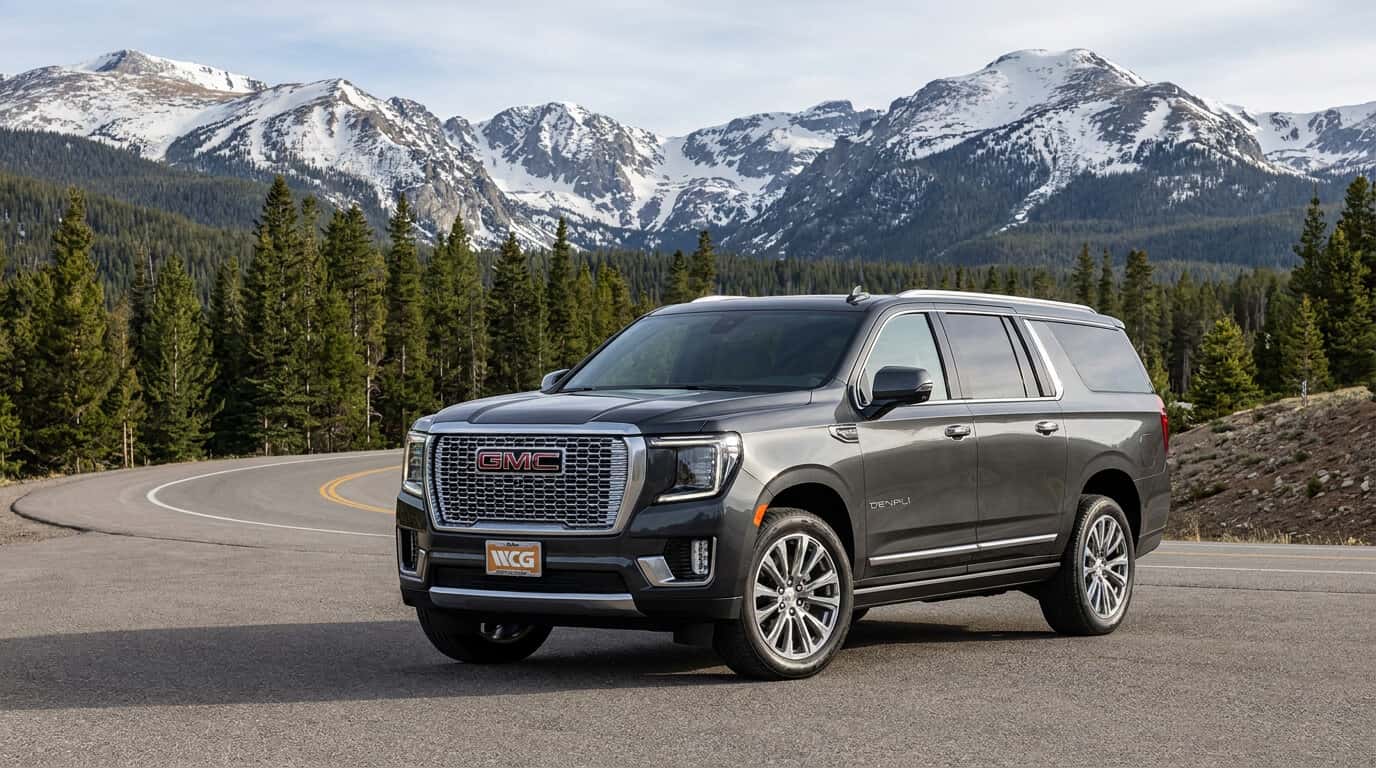
For most Northern Colorado families, the 2026 GMC Yukon XL is the better all-around choice, winning on Super Cruise’s far larger hands-free network, an available Duramax diesel, and more max cargo (144.5 cu ft). The Ford Expedition MAX counters with a higher 9,000-lb tow rating and a bigger base touchscreen.
Choose the Yukon XL for hands-free I-25 commuting, diesel efficiency at altitude, refined GMC interiors, maximum gear space, and local WCG service. Choose the Expedition MAX if you regularly tow above 8,400 lbs or want the largest screens in the cabin.
When you are shopping for a full-size, three-row, extended-length SUV in Northern Colorado, two heavyweights stand out: the 2026 GMC Yukon XL and the 2026 Ford Expedition MAX. Both seat the whole family, haul a trailer, and handle mountain grades. But they excel in different areas — and for Colorado buyers, the choice often comes down to whether you prioritize hands-free tech, diesel efficiency, and cargo, or maximum towing and the biggest screens. This guide breaks down the honest differences.
Key Comparison
Engines, Towing, Tech & Cargo
The Yukon XL gives you three distinct powertrain philosophies and class-leading cargo, while the Expedition MAX offers one EcoBoost engine family with strong torque, the higher tow rating, and the bigger screens. Here is how they stack up side by side.
| Feature | 2026 Yukon XL | 2026 Expedition MAX |
|---|---|---|
| Starting MSRP | ~$72,000 (Elevation) | Generally undercuts XL at base |
| Engine Options | 3 (5.3L V8, 6.2L V8, 3.0L Duramax) | 1 (3.5L EcoBoost, 2 HP tunes) |
| Max HP | 420 hp (6.2L V8) | 440 hp (high-output EcoBoost) |
| Max Torque | 495 lb-ft (3.0L Duramax) | Strong turbo torque, low in range |
| Diesel Option | Yes (Duramax) | No |
| Max Towing | Up to 8,400 lbs | Up to 9,000 lbs |
| Max Cargo (behind row 1) | 144.5 cu ft | ~104 cu ft |
| Base Infotainment | 16.8″ w/ Google built-in | 13.2″ (+ available 24″ panoramic) |
| Hands-Free Driving | Super Cruise (400,000+ mi) | BlueCruise (smaller network) |
| Air Suspension | Available (Air Ride Adaptive) | Not offered |
| Third-Row Legroom | 36.7 in | Competitive, 3-row |
Powertrain Philosophy
Three Yukon XL Engines vs One Expedition
The Yukon XL offers flexibility; the Expedition MAX offers simplicity. The Yukon XL’s three-engine lineup — 5.3L V8, 6.2L V8, and 3.0L Duramax diesel — gives Colorado buyers options for efficiency, refinement, or torque. The Expedition MAX’s single 3.5L EcoBoost V6 is modern and strong, with two power tunes. For diesel buyers and those who want efficiency at altitude, the Yukon XL’s Duramax is unmatched in this matchup.
Engine Details
2026 Yukon XL Engines
- 5.3L EcoTec3 V8: 355 hp / 383 lb-ft. Standard on Elevation and AT4. Efficient naturally aspirated design with no power loss at Colorado altitude. The value choice.
- 6.2L EcoTec3 V8: 420 hp / 460 lb-ft. Standard on AT4 Ultimate and Denali Ultimate, available on AT4 and Denali. More power, naturally aspirated, excellent on Front Range climbs.
- 3.0L Duramax Turbo-Diesel I-6: 305 hp / 495 lb-ft. Available across the lineup. The torque and efficiency king — forced induction that thrives at elevation, with the best fuel economy in the lineup. Ideal for towing and high-mileage Colorado use.
2026 Expedition MAX Engine
- 3.5L EcoBoost V6 Twin-Turbo: 400 hp standard, 440 hp high-output on upper trims, paired with a 10-speed automatic. Modern, efficient, and quick to build boost — one of its strengths is strong torque low in the rev range. It performs well at altitude but asks for careful thermal and brake management on long mountain grades. There is no diesel option.
Colorado Verdict: The Yukon XL’s diesel option is the standout. Diesel torque arrives low and holds at elevation without chasing boost, which is ideal for towing over passes. The naturally aspirated V8s are predictable at altitude, too. If you are comfortable with gasoline and do not tow heavily, both the EcoBoost and the Yukon XL’s V8s are excellent. For serious, sustained mountain work, the Yukon XL diesel is the choice.
Towing Capability
Expedition MAX Wins on Paper
Let us be honest: the Expedition MAX’s up-to-9,000-lb max towing beats the Yukon XL’s up-to-8,400 lbs. That roughly 600-lb advantage is real, and if you regularly pull a large boat, RV, or gooseneck, it matters. But the Yukon XL’s available Duramax diesel produces 495 lb-ft of torque low in the rev range, which makes hauling heavy loads up Colorado grades feel composed and unhurried. The XL also runs a touch under the short-wheelbase Yukon’s max because of its added length and weight — we want to be straight about that.
- 2026 Yukon XL: Up to 8,400 lbs (5.3L V8, 2WD, Max Trailering Package). The 6.2L V8 and Duramax reach 8,200 lbs in 2WD and 8,000 lbs in 4WD.
- 2026 Expedition MAX: Up to 9,000 lbs properly equipped — the higher number in this matchup.
Colorado Verdict: If you tow above 8,400 lbs regularly, get the Expedition MAX. If you tow 8,000 lbs or less, the Yukon XL — especially the diesel — offers excellent real-world performance at altitude with class-leading cargo behind the load. Both have trailer-stability systems and integrated brake control.
Cargo & Space
Yukon XL’s Cargo Advantage
This is where the Yukon XL pulls ahead. It offers up to 144.5 cu ft of cargo behind the first row, 93.6 cu ft behind the second, and 41.5 cu ft behind a full third row — versus roughly 104 cu ft behind the first row in the Expedition MAX. For a Colorado family loading skis, bikes, luggage, and camping gear for a Steamboat trip, that difference is the whole point of buying an extended-length SUV. The Yukon XL also delivers 36.7 inches of third-row legroom, so the people in the back are as comfortable as the cargo behind them.
Driver Assistance
Super Cruise vs BlueCruise
Both offer true hands-free highway driving, but coverage is the difference. The Yukon XL’s Super Cruise works on more than 400,000 miles of compatible North American roads — including I-25 across Northern Colorado — while Ford’s BlueCruise covers a smaller network. For commuters running I-25 between Greeley, Windsor, and Denver, Super Cruise is more likely to be active across the whole route.
Yukon XL Super Cruise: Hands-free on 400,000+ mapped miles, with an eye-tracking camera confirming driver engagement and automated lane changes on supported highways. Available on Elevation and standard on AT4 Ultimate and Denali Ultimate. Expedition MAX BlueCruise: Capable hands-free system on a smaller divided-highway network, with driver-attention monitoring. Excellent on covered roads, but more limited geographic coverage than Super Cruise in Colorado.
Colorado Verdict: If hands-free tech matters and you commute I-25, the Yukon XL’s broader Super Cruise coverage is the clear advantage. The Expedition MAX’s BlueCruise is good where it works; Super Cruise simply works across more of Northern Colorado.
Where Expedition MAX Wins
Being Honest About Ford
We believe the Yukon XL is the better overall choice for Colorado, but the Expedition MAX genuinely excels in a few areas. Here is where Ford wins.
- Maximum Towing Capacity: Up to 9,000 lbs vs the Yukon XL’s 8,400 lbs. If you regularly tow above 8,400 lbs or plan to hook up a large boat or RV, the Expedition MAX has the rating edge.
- Bigger Base Touchscreen: The Expedition MAX’s 13.2-inch base touchscreen is larger than many rivals’ base displays, and its available 24-inch panoramic display is one of the most dramatic screen setups in the segment.
- Strong Standard Turbo Torque: The EcoBoost delivers plenty of torque low in the rev range, giving the Expedition MAX confident, immediate response off the line and during passing without stepping up to a diesel.
- Modern Redesign: Fully redesigned for 2025, the Expedition MAX brings a fresh interior, updated tech, and a contemporary look that appeals to screen-forward buyers.
These are legitimate advantages. The Expedition MAX is a strong, modern SUV. For heavy towers and buyers who want the largest screens, it is a compelling pick. Our recommendation: test drive both at Weld County Garage — the differences become obvious behind the wheel.
Final Recommendation
Which Wins for Northern Colorado?
When you factor in altitude, mountain driving, the I-25 commute, and how Northern Colorado families actually load their vehicles, the Yukon XL’s advantages stack up. Super Cruise on I-25, an available diesel for efficiency and torque, 144.5 cu ft of cargo, and refined GMC interiors fit Colorado life.
- Hands-Free Coverage: Super Cruise’s 400,000-plus-mile network covers more of I-25 and Northern Colorado than BlueCruise. Advantage: Yukon XL.
- Efficiency at Altitude: The available Duramax diesel delivers the best efficiency in this matchup plus 495 lb-ft of torque, with no diesel offered on the Expedition MAX. Advantage: Yukon XL.
- Cargo & Family Room: 144.5 cu ft max cargo and 36.7 inches of third-row legroom beat the Expedition MAX for gear and people. Advantage: Yukon XL.
- Maximum Towing: The Expedition MAX’s 9,000-lb rating leads. Advantage: Expedition MAX.
- Screens: The Expedition MAX’s bigger base touchscreen and available panoramic display lead on raw size. Advantage: Expedition MAX.
- Service & Support: Weld County Garage GMC is ten minutes from downtown Greeley with factory GMC expertise. Advantage: Yukon XL (convenience).
Final Colorado Verdict: The 2026 GMC Yukon XL is the better choice for most Northern Colorado buyers — especially if you commute I-25, want diesel efficiency at altitude, need maximum cargo, and value refined interiors and local service. The Expedition MAX is an excellent, modern SUV and the right call if you regularly tow above 8,400 lbs or want the biggest screens in the cabin. For overall Colorado lifestyle fit, the Yukon XL wins.
Common Questions
Frequently Asked Questions
Weld County Garage GMC — Greeley, CO
Ready to Find Your Yukon XL?
Visit us at 2699 47th Ave, Greeley, CO 80634 or call 970-400-9952. Serving Northern Colorado since 1908.
0 comment(s) so far on 2026 GMC Yukon XL vs Ford Expedition MAX