

Do I Need Fuel Additive in My 3.0 Diesel?
Do I Need Fuel Additive in My 3.0 Diesel?
By Ryan Green, Marketing Director — Weld County Garage GMC | Updated July 2026
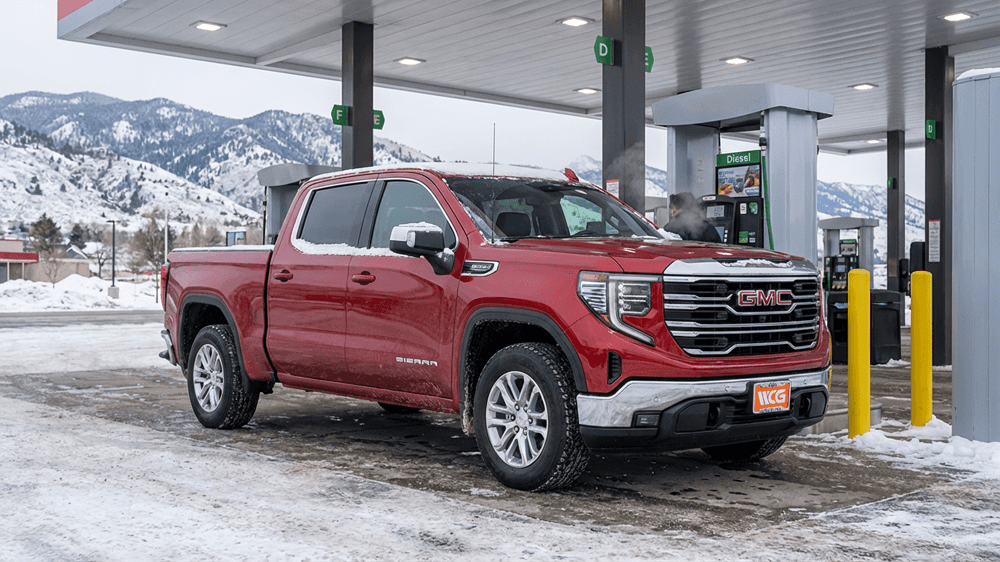
You just spent serious money on a truck with the 3.0-liter Duramax diesel, and now you’re standing in the parts aisle at the auto store staring at a wall of bottles — Power Service, Hot Shot’s Secret, Opti-Lube, Stanadyne — each one promising cleaner injectors, better fuel economy, and longer engine life. Meanwhile, half the diesel forums say you absolutely need an additive, and the other half say you’re wasting your money.
So who’s right? We went straight to the source — GM’s own Technical Service Bulletin on diesel fuel additives — and combined it with what we see every day servicing 3.0 Duramax trucks here in Greeley. Our technicians work on these engines weekly, and we stock the GM-approved products in our parts department. Here’s the honest answer.
Direct Answer
No — GM says fuel additives are not required or recommended for the 3.0L Duramax if you use TOP TIER Detergent Diesel fuel.
This comes directly from GM Technical Service Bulletin 03-06-04-017J. The one exception: if you can’t find TOP TIER diesel in your area, GM recommends ACDelco Diesel Fuel Conditioner (P/N 19540630) as a backup. That’s it.
The only practical scenario where an additive genuinely helps is cold-weather anti-gel protection — and if you live in Northern Colorado, that’s worth understanding.
Key Takeaways
- GM TSB 03-06-04-017J states that diesel fuel additives are “not required or recommended” for the 3.0L Duramax.
- TOP TIER Detergent Diesel is GM’s primary fuel recommendation — it already contains the detergent additives your engine needs.
- ACDelco Diesel Fuel Conditioner (P/N 19540630) is the only GM-approved additive, intended as a backup when TOP TIER fuel is unavailable.
- Winter anti-gel is the one practical exception — permitted by GM as long as the product contains no metals, alcohol, or water emulsifiers.
- Cetane boosters will not improve performance beyond the engine’s design requirement.
- Never use additives containing metal-based compounds, alcohol, or water emulsifiers — these can damage the DPF and fuel system.
What GM Actually Says — The Official TSB
This isn’t opinion or forum speculation. GM published Technical Service Bulletin 03-06-04-017J — titled “Diesel Fuel Additives Are Not Required or Recommended” — covering all GM diesel engines, including both generations of the 3.0L Duramax (the LM2 in 2020–2022 models and the LZ0 in 2023 and newer).
The TSB breaks down the major categories of fuel additives and GM’s position on each one:
| Additive Category | GM’s Position | Bottom Line |
|---|---|---|
| Cetane Boosters | Increasing cetane above engine design requirement won’t improve performance | Don’t waste your money |
| Lubricity Additives | Engines are designed for low-sulfur diesel without supplemental lubricity | Not needed with quality fuel |
| Water Emulsifiers | Actively discouraged — can cause damage to fuel system and aftertreatment | Never use these |
| Fuel Stability Additives | Aftermarket stability additives are discouraged | Not recommended |
| Anti-Gel / Winter | Permitted if free of metal-based compounds, alcohol, and emulsifiers | OK in cold weather — with conditions |
| Injector Cleaners | Use TOP TIER diesel instead; ACDelco Fuel System Treatment Plus only by technician recommendation | TOP TIER fuel handles this |
The critical rule from the TSB: Any additive you use “must not contain any metal-based additives, alcohol, or other water emulsifiers.” Products with copper, manganese, iron compounds, or any form of alcohol can damage the exhaust aftertreatment system, corrode fuel system seals, and potentially disable the diesel particulate filter. This is a hard line — not a suggestion.
The message from GM is about as clear as it gets: fill up with good diesel, and you don’t need to pour anything else into your tank.
What Is TOP TIER Detergent Diesel?
TOP TIER is a fuel quality certification — not a brand name and not a marketing gimmick. It was created by a consortium of automakers (including GM) who decided the EPA’s minimum detergent requirements for diesel fuel weren’t strong enough to protect modern engines. Fuel retailers voluntarily join the program and must meet higher additive standards at every grade they sell.
What makes TOP TIER diesel different from regular #2 diesel? It contains significantly higher concentrations of detergent additives that prevent carbon deposit buildup on fuel injectors, combustion chambers, and intake valves. It’s essentially diesel fuel that already has the good stuff mixed in at the refinery level — which is why GM says you don’t need to pour anything extra into your tank when you use it.
Finding TOP TIER Diesel Near Greeley
The good news for Northern Colorado drivers: TOP TIER diesel is more accessible than many owners realize. Shell, Chevron, Sinclair, Costco, Conoco, and several other major fuel retailers carry TOP TIER certified diesel. The free TOP TIER Station Finder app lets you search by zip code to find certified stations along your daily route in Greeley, Fort Collins, Loveland, and Windsor.
If you can consistently fill up at a TOP TIER station — and in the Greeley area, that’s realistically achievable — GM’s official position is that you don’t need any additive at all. Not for lubricity, not for injector cleaning, not for cetane. The fuel already has it covered.
Tip: Look for the TOP TIER logo on the pump, the pump handle, or the station canopy. If you don’t see it, the station may still sell quality diesel — it just hasn’t gone through the certification process. When in doubt, the station finder app is your best bet.
The challenge comes when you’re fueling up in rural areas, on road trips, or at smaller independent stations that may not carry TOP TIER diesel. That’s where ACDelco’s approved products come in — and we’ll cover those shortly.
When Fuel Additives Actually Make Sense
Despite GM’s blanket recommendation against additives, there are real-world situations where they serve a legitimate purpose. The key is understanding the difference between “nice to have” and “actually needed.”
Scenario 1: You Can’t Get TOP TIER Diesel
If your regular fueling stops don’t carry TOP TIER diesel — maybe you live in a rural area outside Greeley, or your job takes you to small towns along the Eastern Plains — then ACDelco Diesel Fuel Conditioner (P/N 19540630) is GM’s recommended backup. It provides the lubricity enhancement, corrosion protection, and water dispersal that TOP TIER fuel would otherwise handle. Add it at every fill-up when using non-TOP-TIER diesel.
Scenario 2: Cold Weather Anti-Gel Protection
This is the one use case that’s hard to argue against in Northern Colorado, and it’s the one GM explicitly permits. Standard #2 diesel fuel starts forming wax crystals (the “cloud point”) around 10°F to 20°F and can fully gel — meaning it won’t flow through fuel lines or filters — somewhere around 0°F to -10°F. If you’ve ever had diesel gel on you during a cold snap, you know it’s not something you want to experience twice.
We’ll dig into the Northern Colorado winter angle in detail in the next section.
Scenario 3: Injector Deposits (Technician-Recommended Only)
If your 3.0 Duramax develops rough idle, hard starts, or reduced power that your technician diagnoses as injector deposits, GM authorizes the use of ACDelco Fuel System Treatment Plus (P/N 88865597). This is a stronger cleaning product intended for specific diagnostic situations — not something you should dump in every tank “just because.” If our service team recommends it after diagnosing your truck, that’s the appropriate time to use it.
Winter Diesel in Northern Colorado: The Anti-Gel Question
Here’s where the conversation gets practical for anyone driving a 3.0 Duramax in Greeley, Fort Collins, Loveland, or anywhere along the Front Range. Northern Colorado winters routinely bring stretches of single-digit and sub-zero temperatures, and if you’re heading up to the mountains for skiing or snowmobiling, you can encounter -20°F or colder.
What Fuel Distributors Already Do
The first thing to understand is that fuel distributors in Colorado aren’t selling the same diesel in January that they sell in July. From roughly November through March, Colorado fuel suppliers blend #1 diesel into #2 diesel to lower the cloud point and gel point. The exact blend ratio varies by supplier and region, but the goal is to produce a winterized diesel that resists gelling down to approximately 0°F to -10°F. This seasonal blending is why most Northern Colorado drivers never experience gelled fuel during a typical winter.
When Anti-Gel Additive Is Worth It
For everyday driving around Greeley at 4,700 feet of elevation, the winterized diesel blend at your local station will handle most cold snaps. But there are specific situations where an anti-gel additive provides genuine protection:
- Extended sub-zero cold. When temperatures drop below -10°F for multiple days — which happens a few times most Northern Colorado winters — the winterized blend at the pump may not be enough. An anti-gel additive can lower your fuel’s cold filter plugging point by an additional 20°F to 40°F.
- Mountain trips. If you’re driving your Sierra or Yukon up to Estes Park, Steamboat Springs, or the ski resorts, temperatures at elevation can be 15°F to 25°F colder than what you left in Greeley. Fuel you pumped at the valley floor may not be blended aggressively enough for 9,000+ feet.
- Overnight outdoor parking. If your truck sits outside all night — no garage — your fuel tank temperature drops to ambient. A truck parked in a heated garage faces far less gelling risk than one sitting in a ranch driveway at -15°F.
- Fuel from outside the region. If you filled up in a warmer part of the state (say, Pueblo or the Western Slope in autumn) and then drove into a Northern Colorado cold snap, that fuel may not have the winter blend you need.
Pro Tip
Always add anti-gel additive before your fuel gets cold — ideally at the pump when you fill up. Once diesel has already started to gel, anti-gel additives won’t reverse the process. You’d need a de-icer or emergency rescue product at that point, which is a much more expensive and stressful situation.
Remember GM’s rule: even winter anti-gel products must contain no metal-based additives, alcohol, or water emulsifiers. Check the label before you buy.
Popular Aftermarket Additives: An Honest Look
If you spend any time in diesel truck forums, you’ll find owners with 100,000+ miles swearing by various aftermarket additives. We’re not going to tell you these people are wrong about their personal experience. But we do want to put the most popular options in context against what GM actually recommends.
Power Service Diesel Fuel Supplement
The most commonly recommended additive in 3.0 Duramax forums. White bottle (winter formula with anti-gel) and grey bottle (summer diesel kleen). Does not contain metals, alcohol, or emulsifiers. Popular among owners who want extra insurance, especially in cold weather. Not GM-endorsed, but widely used without reported issues.
Hot Shot’s Secret EDT (Everyday Diesel Treatment)
Combines a lubricity agent, cetane booster, and injector cleaner. Also offers a separate Diesel Winter Anti-Gel product. Free of metals and alcohol. Used by a smaller but dedicated group of Duramax owners. Again, not GM-endorsed.
Opti-Lube XPD
Lubricity-focused additive with a strong following among diesel enthusiasts. Also offers a winter formula. Does not contain metals or alcohol. More expensive per treatment than Power Service but used by owners who prioritize injector protection in high-mileage trucks.
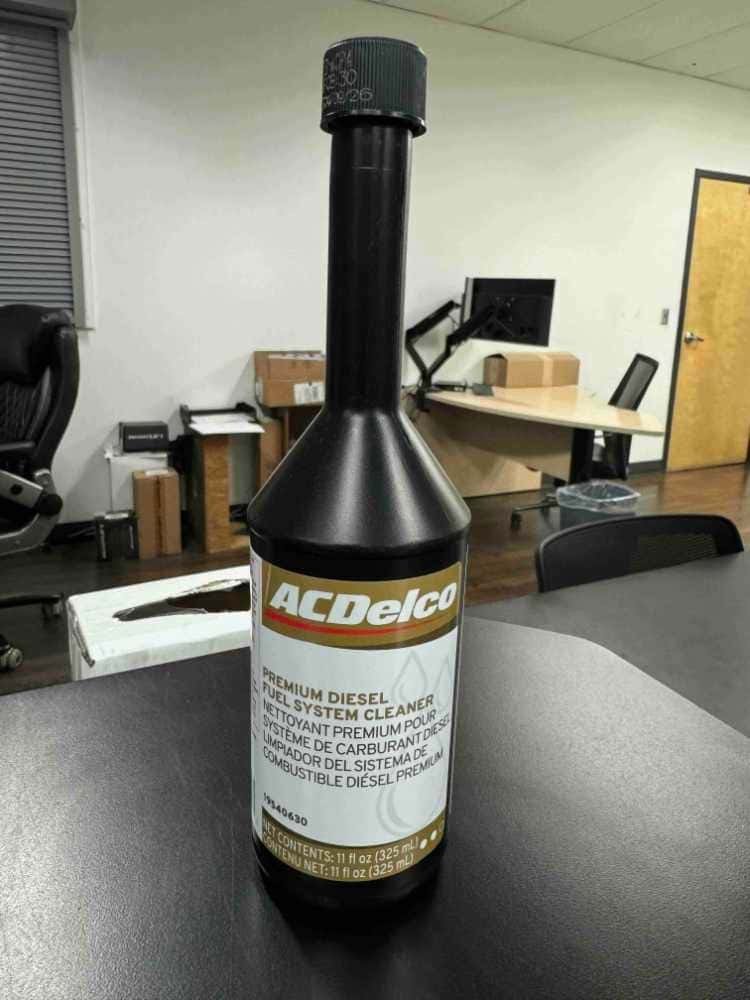
ACDelco Diesel Fuel Conditioner (P/N 19540630)
The only additive GM officially recommends. Alcohol-free, metal-free, and multifunctional — covers lubricity, corrosion protection, and water dispersal. Intended specifically for use when TOP TIER diesel is unavailable. Available at any GM parts counter, including the Weld County Garage parts department.
Here’s the honest take: if you’re using TOP TIER diesel at every fill-up, none of these products are necessary. If you want extra peace of mind, the ACDelco product is the safest bet because it’s the one GM actually stands behind. And if you’re dead set on an aftermarket option, stick with products that clearly state they’re free of metals, alcohol, and emulsifiers — that’s GM’s hard line.
The “cheap insurance” argument you hear in forums? There’s something to it, but only if you’re not already buying good fuel. Pouring a $12 additive into a tank of TOP TIER diesel is like buying insurance on top of insurance.
What Can Actually Damage Your 3.0 Duramax
This is the section most forum posts and affiliate product roundups skip entirely — and it’s the most important one. Not all additives are created equal, and some can cause serious damage to the 3.0L Duramax’s fuel system and exhaust aftertreatment components.
GM’s TSB draws three hard lines. Never use any additive containing:
Metal-Based Compounds
Additives containing copper, manganese, iron, or other metallic compounds can poison the diesel oxidation catalyst and diesel particulate filter (DPF). These are extremely expensive components — a DPF replacement alone can cost $3,000 to $5,000. Some older-formula additives still use metallic compounds as combustion improvers. Always check the label.
Watch for: Any product marketed as a “combustion catalyst” or “fuel catalyst” — these frequently contain metallic compounds.
Alcohol
Alcohol-based additives can corrode rubber seals and O-rings in the high-pressure common-rail fuel system. The 3.0L Duramax operates at fuel pressures up to 36,000 PSI — seal integrity is everything at those pressures. Alcohol can also strip the lubricity from diesel fuel, which is the opposite of what you’re trying to achieve.
Watch for: Isopropyl alcohol or methanol listed as ingredients, especially in budget “water remover” products.
Water Emulsifiers
Some additives contain emulsifiers that suspend water droplets throughout the fuel rather than letting the water separator do its job. GM specifically wants water to separate from diesel so the fuel-water separator can remove it. Emulsifiers defeat this system and allow water to pass through to the injectors, where it can cause pitting and corrosion at extreme pressure.
Watch for: Products that claim to “eliminate water” by “dissolving” it into the fuel — these are emulsifiers by another name. A proper water demulsifier separates water so it can be drained; an emulsifier suspends it throughout your fuel supply.
The LM2 vs. LZ0: Do Both Engines Have the Same Fuel Needs?
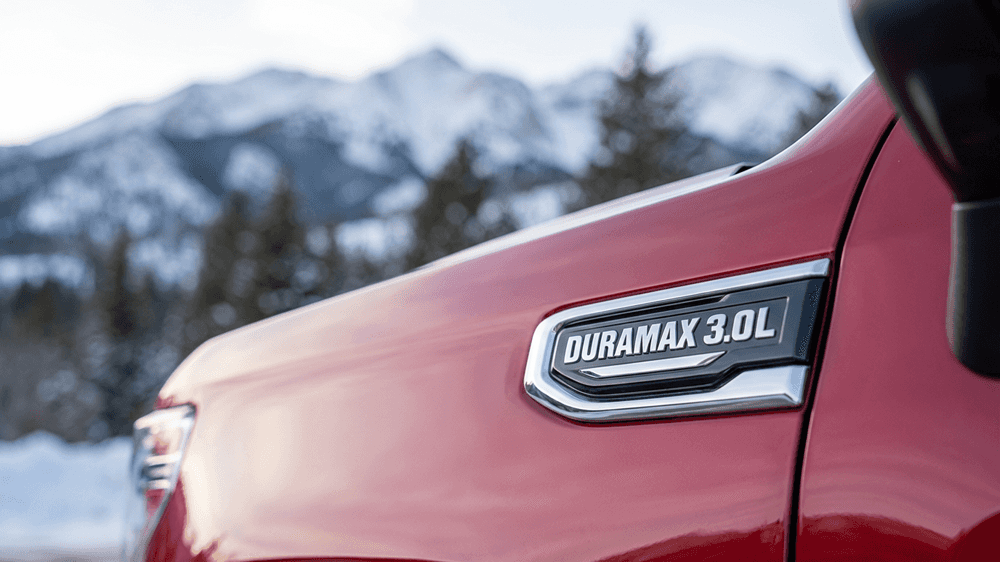
The 3.0L Duramax inline-six turbo-diesel comes in two generations. The LM2 debuted in the 2020 Chevrolet Silverado 1500 and GMC Sierra 1500, and later expanded to the 2021 Tahoe, Yukon, and Suburban. The LZ0 replaced it starting with the 2023 model year, bringing revised calibrations, improved NVH (noise, vibration, and harshness), and updated emissions tuning.
From a fuel standpoint, the answer is simple: both engines have identical fuel requirements. Both call for standard #2 diesel fuel (minimum 40 cetane), both benefit from TOP TIER Detergent Diesel, and GM’s additive guidance in TSB 03-06-04-017J applies equally to the LM2 and LZ0. If you’re shopping for a new 2026 Sierra 1500 with the Duramax diesel or you’ve had your LM2-equipped truck since 2020, the fuel additive answer is the same.
The LZ0 did not introduce any new fuel additive requirements or recommendations. Both engines use the same high-pressure common-rail fuel injection system, the same diesel particulate filter, and the same exhaust aftertreatment system — which means the same additives that can damage an LM2 can damage an LZ0.
What About the Cost Argument?
One of the most common justifications for aftermarket additives is cost: “It’s only $8 to $15 per bottle — cheap insurance.” Let’s run the math on that.
If you use a fuel additive at every fill-up and fill up once a week, you’re spending $400 to $780 per year on additives. Over the typical 5-year ownership period of a leased or financed truck, that’s $2,000 to $3,900. That’s not pocket change — it’s enough to cover several diesel oil changes or a significant maintenance service.
Compare that to simply choosing a TOP TIER diesel station, which typically costs no more per gallon than non-certified diesel. The detergent additives are already in the fuel — you’re not paying extra for them. If your regular station carries TOP TIER diesel, the cost of aftermarket additives is truly unnecessary.
The exception, again, is winter anti-gel. If you use it only during the coldest months (December through February in Northern Colorado), you’re looking at 12 to 14 fill-ups — maybe $100 to $175 for the season. That’s a reasonable insurance policy against the genuine inconvenience and potential tow bill of gelled fuel.
Why trust this guide? This article is written by Ryan Green, Marketing Director at Weld County Garage GMC in Greeley, Colorado. Our service department has factory-trained GM diesel technicians who work on the 3.0L Duramax daily. The guidance here is grounded in GM Technical Service Bulletin 03-06-04-017J, the official 3.0L Duramax Diesel Supplement owner’s manual, and our firsthand experience maintaining these engines for Northern Colorado drivers since the 3.0 Duramax launched in 2020.
Frequently Asked Questions
More Diesel & Engine Guides
Explore GMC Trucks
Weld County Garage GMC — Greeley, CO
Questions About Your 3.0 Duramax Diesel?
Our factory-trained diesel technicians know the 3.0L Duramax inside and out. Whether it’s a fuel system question, routine maintenance, or a diesel service you’ve been putting off — we’ve got you covered. We’re at 2699 47th Ave, Greeley, CO 80634. Call 970-400-9952.
Written by Ryan Green, Marketing Director at Weld County Garage GMC. Last updated July 2026. Information provided for educational purposes and reflects the author’s expertise with GM vehicles serving Northern Colorado drivers.
0 comment(s) so far on Do I Need Fuel Additive in My 3.0 Diesel?