

Can I Turn Off Auto Start-Stop? Yes — Here’s Exactly How
Can I Turn Off Auto Start-Stop? Yes — Here’s Exactly How
By Ryan Green, Marketing Director — Weld County Garage GMC | Updated March 2026
You’re sitting at a red light, minding your own business, when your truck engine shudders and goes quiet. For a split second your stomach drops — did something just die? Then the light changes, you lift your foot off the brake, and the engine fires back up like nothing happened.
That’s auto start-stop doing its job. And if you’re reading this, there’s a good chance you’ve already had that exact experience, felt at least a little unsettled by it, and started Googling whether you can just make it stop.
You can. Here’s the short version — and then we’ll go deep for anyone who wants the full picture.
Direct Answer
Yes — you can turn off auto start-stop on virtually every vehicle that has it.
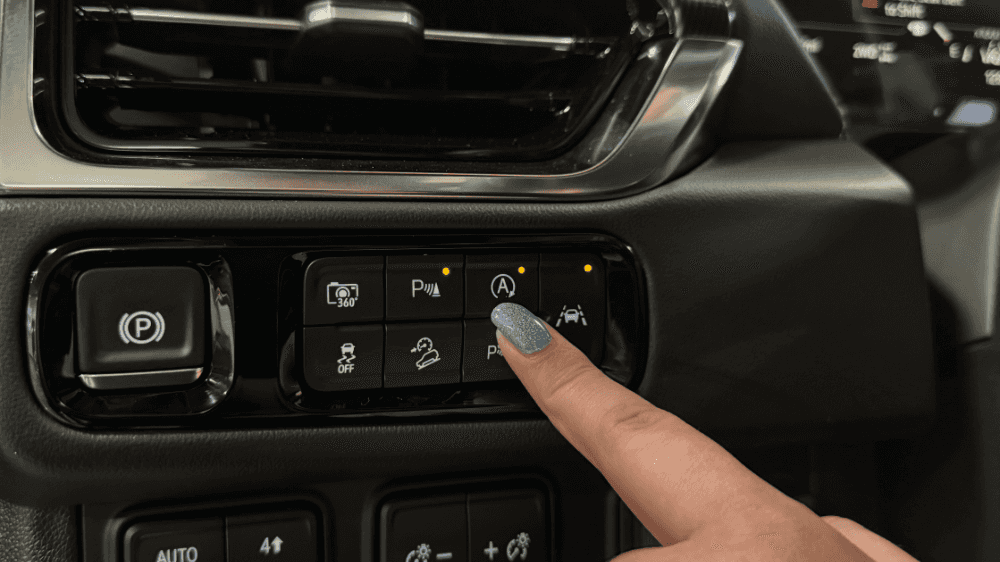
On GMC trucks and SUVs — and most other GM, Ford, Ram, Dodge, and Jeep vehicles — there is a dedicated button on your dashboard marked with a circular arrow around the letter “A.” Press it once before you start driving and the feature turns off for that trip.
The catch: it resets every time you restart the vehicle. For a permanent solution, a simple plug-and-play bypass module (typically $50–$130) handles it in about 30 minutes — no warranty concerns when done correctly.
How to Turn Off Auto Start-Stop Right Now (GMC & GM Vehicles)
If you own a GMC Sierra, Terrain, Acadia, Canyon, Yukon, or most Chevrolet, Buick, or Cadillac models from approximately 2017 onward, here’s the quickest path:
- Start your vehicle as you normally would.
- Find the “A” button. On most GMC Sierra and Terrain models it sits on the instrument panel to the right of the steering wheel. On some models it’s on the center console near the shifter. The icon looks like a circular arrow with the letter A inside it.
- Press and hold for about 20 seconds on some earlier model years, or a single press on 2022+ models. The indicator light on the button will confirm the feature is off.
- Drive normally. The engine will stay running at every stop until you turn the vehicle off.
Important: Older GM Models (2014–2016)
Early GM vehicles that introduced auto start-stop — including the 2014–2015 Chevrolet Malibu, 2015–2016 Impala, and early Buick models — did not include a factory disable button. On these vehicles, the only way to disable auto start-stop (even temporarily) is through a third-party ECU tune or a plug-in bypass module. The factory “A” button approach became standard across GM’s lineup starting around 2017–2018.
That’s really all there is to it. The system is smart enough to override your preference under certain conditions — like if your battery charge drops critically low — but in normal driving it stays off for the entire trip.
Why Does It Reset Every Time?
This is the part that frustrates almost everyone. GM — and every other automaker using this system — programs it to come back on with every new ignition cycle. The reason is straightforward: auto start-stop is part of how automakers meet EPA fuel economy ratings. If drivers could permanently disable it at the factory, those certified numbers would be different. So the default-on behavior is baked in by regulation, not manufacturer stubbornness.
If pressing a button every morning sounds like something you’ll forget, a plug-and-play bypass module — available for most GM vehicles — connects to the factory wiring harness behind the dashboard button and remembers your preference. We’ll cover that in detail below.
Is It Worth Disabling?
That’s genuinely a personal call. About 40% of drivers disable auto start-stop at least occasionally, according to automotive research. The most common reasons are the shudder sensation at stops, concern about extra wear on the starter and battery, and the feeling that the brief engine-off moment compromises cabin comfort or responsiveness. In 2025, the EPA under administrator Lee Zeldin even announced efforts to remove the regulatory incentives that pushed automakers to adopt the feature, citing minimal real-world fuel savings and widespread consumer dissatisfaction.
On the flip side, in heavy stop-and-go traffic the system can save a measurable amount of fuel — the range most SAE studies cite is 3% to 10% depending on driving conditions. Whether that tradeoff is worth it is entirely up to you. The good news is that GM built the option right into the dashboard. They know drivers have different preferences, and they gave you the switch.
A Brief History of Auto Start-Stop Technology
If auto start-stop feels like a recent annoyance invented to squeeze a few MPGs out of modern engines, you might be surprised to learn it has roots going back over 50 years.
The concept is generally traced to Toyota in 1974, when the company introduced an automatic on/off engine switch on the Toyota Crown in response to the global oil price crisis. Toyota claimed fuel savings of around 10% — and the core logic hasn’t changed much in the half-century since.
The technology went dormant before European automakers picked it up. Volkswagen demonstrated stop-start on the Polo Formel E in 1983, and Fiat experimented with a “City-matic” system on the Regata in the 1980s. Neither achieved wide adoption — early systems were noticeably intrusive, and the added engineering cost was hard to justify at scale.
Mitsubishi brought it back in 1999 under the name Auto Stop & Go (AS&G) on the Mitsubishi Pistachio. Citroën paired with Valeo to put a modern stop-start system on the C3 in 2004. Meanwhile, hybrid vehicles — beginning with the 1997 Toyota Prius — normalized the idea of engines shutting off at stops as a side effect of their hybrid architecture.
The real tipping point was 2007–2012, when tightening fuel economy regulations in both Europe and the United States pushed mainstream automakers to add the feature to conventional internal combustion vehicles. By the mid-2010s, stop-start technology was on its way to becoming standard equipment on most new vehicles sold in the U.S. — including every major GM platform.
When Did GM Introduce Auto Start-Stop? Which Models Have It?
General Motors began rolling out auto start-stop in earnest with the 2014 Chevrolet Malibu — one of the first mainstream GM models to feature the system. From there, adoption spread steadily across the lineup through the late 2010s. Importantly, once it’s standard on a model, GM does not offer the option to delete it at the factory — you get it whether you want it or not.
| Make / Model | Auto Start-Stop Introduced | Notes |
|---|---|---|
| Chevrolet Malibu | 2014–2018 | First mainstream GM model — no factory disable button; 3rd-party required |
| Chevrolet Impala | 2015–2018 | 2015–2016: no factory button; 2017+: button present |
| Buick Encore / Envision | 2016+ | Early 2016 models may lack factory button; verify by model year |
| Cadillac CT6 / ATS / CTS | 2016–2017+ | |
| Chevrolet Cruze / Trax | 2016–2017+ | |
| GMC Acadia | 2017+ | Second-gen VIN N models |
| Buick LaCrosse / Regal / Enclave | 2017–2018+ | |
| Cadillac XT5 | 2017+ | |
| Chevrolet Equinox | 2018+ | |
| GMC Terrain | 2018–2024+ | Entire second-gen lineup |
| Chevrolet Silverado 1500 | 2019+ | All engine options |
| GMC Sierra 1500 | 2019–2026+ | All engine options |
| GMC Yukon / Yukon XL | 2021+ | Fifth generation |
| Chevrolet Tahoe / Suburban | 2021+ | Fifth generation |
| GMC Canyon | 2023+ | Third-gen midsize truck |
Not sure if your vehicle has it? Look for the circular “A” button on your dashboard. Or contact our service team at Weld County Garage GMC — we can look it up for any GM model year in seconds.
How to Disable Auto Start-Stop on Specific GMC & GM Models
GMC Sierra 1500 (2019–2026)
The Sierra is our most popular vehicle at Weld County Garage, and the auto start-stop question is one of the first things new owners ask about. The disable button sits on the instrument panel to the right of the steering wheel. Press and hold for approximately 20 seconds on early model years (2019–2021), or a single press on 2022+ models. The system resets with every ignition cycle. For a permanent fix, plug-and-play bypass modules from brands like Autostop Eliminator and ZicMoto are compatible with the 2019–2026 Sierra and install in 15–30 minutes. Bonus tip: Selecting 4 Low or Track Mode (where equipped) also automatically suppresses the feature without pressing the button.
Explore more Sierra guides: Technology Features • Engine Options • All 7 Trim Levels
GMC Terrain (2018–2024+)
The second-generation Terrain brought auto start-stop standard across all trim levels. The “A” button on the Terrain is located on the center stack, typically to the right of the hazard light button. A single press disables the system for the current drive. The Terrain is particularly well-supported by aftermarket bypass modules, with coverage extending through 2026 model years.
GMC Acadia (2017+)
On the Acadia, the auto start-stop button is located in the center console area near the shifter or on the instrument panel depending on the trim level. The procedure is identical — press once to disable for the trip, resets on next start. Compatible bypass modules are available for all Acadia model years that feature the system.
Explore more Acadia guides: 2026 Acadia Overview • Technology Features • Trim Levels Explained
GMC Yukon / Yukon XL (2021+)
The fifth-generation Yukon introduced auto start-stop to GM’s full-size SUV lineup. Given the Yukon’s size and powertrain, the momentary shutdown is more noticeable than in smaller vehicles — which is why disabling it is especially common among Yukon owners. The button location is consistent with other GMC models: look for the “A” icon on the center console panel near the climate controls.
GMC Canyon (2023+) and Chevrolet Models
The third-generation Canyon and Chevrolet Silverado, Tahoe, Suburban, and Equinox all follow the same dashboard button convention. Once you know what the “A” icon looks like, you’ll find it quickly on any GM vehicle. The disable process is identical across all of these platforms.
Permanently Disabling Auto Start-Stop: Aftermarket Options
If pressing a button every single morning before you pull out of the driveway isn’t your idea of fun, there are well-established aftermarket solutions that remember your preference for you. The most widely-used options for GM vehicles are:
Autostop Eliminator
A plug-and-play device that installs behind the factory “A” button. Connects directly to the factory wiring harness — no cutting, no splicing, completely reversible. Compatible with most GM vehicles from 2016–2026. Can be removed in minutes without any trace, making it popular for leased vehicles.
ZicMoto Gen II ESS Override
Marketed specifically for the GMC Sierra (2019–2026) and GMC Terrain (2018–2026). Installs in approximately 3 minutes on most trims. Works by simulating a button press at every startup. Completely plug-and-play with no permanent changes to the vehicle.
SmartStopStart
Another plug-and-play option with broad GM vehicle coverage. Simulates a button press every time the vehicle starts. All factory functions — including the ability to manually re-enable auto start-stop — continue to work normally.
None of these modules modify factory components, cut any wires, or make permanent changes to the vehicle’s systems. If you’d rather have a professional handle it, our service team at Weld County Garage GMC can order and install the appropriate module for your vehicle — it’s a quick service visit.
Rather Have a Pro Handle It?
We’ll Install It While You Wait
Our service team at Weld County Garage stocks bypass modules for most GMC models. Quick appointment — no dealer programming required.
Auto Start-Stop on Other Domestic Vehicles: Ford, Ram, Dodge & Jeep
Auto start-stop isn’t exclusive to GM. Every major domestic automaker adopted it during the same regulatory push, and the disable process is nearly identical across brands — though each has its own quirks.
Ford F-150 and Other Ford Models
Ford introduced Auto Start-Stop on the F-150 beginning with the 2017 model year, covering the 2.7L EcoBoost, 3.5L EcoBoost, and 5.0L V8 engines. The feature has since spread to the Ford Explorer (2016+), Ford Escape (2017+), Ford Edge, Ford Bronco, and Ford Ranger. On Ford vehicles, the disable button uses the same circular “A” symbol and is typically located on the instrument panel to the left of the steering wheel or on the center console. Like GM, Ford resets the system with every key cycle, and no factory-level permanent disable option exists. Aftermarket modules are widely available for most Ford F-150 model years. See our full 2026 GMC Sierra vs. Ford F-150 Colorado comparison →
Ram 1500 (2019+)
Ram broadly rolled out auto start-stop with the 2019 Ram 1500 redesign, making it standard across most engine configurations. Earlier models with the EcoDiesel (from 2013) had the feature on specific trims. Ram’s disable button is located on the instrument panel using the same “A” icon. One Ram-specific nuance: the truck requires a complete stop before the system activates — it won’t cut the engine during a slow roll, which is more conservative behavior than some other platforms. See our full 2026 GMC Sierra vs. Ram 1500 comparison →
Dodge and Jeep Vehicles
Dodge and Jeep vehicles — both under the Stellantis (formerly FCA) umbrella — have featured auto start-stop on various models since around 2014. The Jeep Grand Cherokee, Jeep Wrangler (from 2018), Jeep Cherokee, and Dodge Durango are among the most common models equipped with it. FCA-based vehicles use the same button convention. A single press of the “A” button disables the system for the trip, and it resets on the next start. Aftermarket bypass solutions are widely available for these platforms as well.
Is Auto Start-Stop Bad for Your Engine, Starter, or Battery?
This is the concern that drives most of the disable-it conversations we have at our service counter, so it deserves a straight answer.
The Short Answer
Not in the way you might think.
The engineering concern with conventional starts is cold-start friction, when oil hasn’t fully circulated. Auto start-stop systems are specifically programmed to only activate once the engine is fully warmed up — avoiding cold-start conditions entirely.
Vehicle manufacturers know a conventional starter wasn’t built to cycle dozens of times per day. Vehicles equipped with auto start-stop use reinforced starter motors (sometimes a belt-integrated starter-generator), AGM (Absorbent Glass Mat) batteries that handle deep cycling far better than standard lead-acid batteries, and enhanced motor mounts designed to absorb the vibration of more frequent engine cycling. The system is built for the workload it creates.
Independent research and SAE studies generally show no statistically significant increase in wear attributable to auto start-stop when the vehicle is properly maintained. The one real trade-off: if you ever need to replace the AGM battery in one of these vehicles, it typically costs $150–$250 versus $80–$120 for a conventional replacement. Worth knowing going in.
Will Disabling Auto Start-Stop Void My Warranty?
Using the factory dashboard button: absolutely no warranty impact. GM built the button specifically for this purpose.
Using a plug-and-play aftermarket bypass module: generally no warranty impact, because these devices don’t modify factory components. Under the Magnuson-Moss Warranty Act, a dealer cannot void your warranty simply because you’ve added an aftermarket accessory, unless they can prove the accessory directly caused the failure in question. A module that connects to the factory wiring harness without cutting or splicing sits in very safe territory. Hard-wired permanent modifications are a different story — if you’re unsure, ask your service advisor before proceeding.
Frequently Asked Questions About Auto Start-Stop
Current Service Specials at Weld County Garage GMC
While your vehicle is in for a bypass module installation — or any other service — take advantage of these current offers. View all specials →
More 2026 GMC Sierra 1500 Guides
Engine Options Guide
Technology Features
Towing Capacity Guide
Safety Features
Denali Ultimate Deep Dive
Colorado Buyer’s Guide
Sierra vs. Ram 1500
Sierra vs. Ford F-150
More 2026 GMC Acadia Guides
Weld County Garage GMC — Greeley, CO
Questions About Your GMC? Our Service Team Is Here.
Whether you want a bypass module installed, have questions about your Sierra, Terrain, Yukon, or Acadia, or just want to talk through your options — we’re at 2699 47th Ave, Greeley, CO 80634. Call 970-400-9952.
Written by Ryan Green, Marketing Director at Weld County Garage GMC. Last updated March 2026. Information provided for educational purposes and reflects the author’s expertise with GM vehicles serving Northern Colorado drivers.
0 comment(s) so far on Can I Turn Off Auto Start-Stop? Yes — Here’s Exactly How